

arctic moss
- noun
- /ˈɑrk.tɪk mɔs/
- UK
- Caribou feed on arctic moss throughout the winter when other vegetation is scarce.
Examples
-
Researchers are studying how climate change affects the distribution of arctic moss in northern ecosystems.
-
The arctic moss grows in cold tundra environments and is crucial for the survival of many Arctic animals.
-
The arctic moss is crucial for reindeer survival.
-
Many animals rely on arctic moss for food.
-
Caribou feed on arctic moss throughout the winter when other vegetation is scarce.
-
The arctic moss grows in cold tundra environments and is crucial for the survival of many Arctic animals.
-
Researchers are studying how climate change affects the distribution of arctic moss in northern ecosystems.
Synonyms
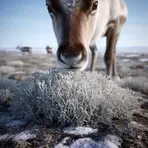
A grey, branching lichen that grows in the Arctic and feeds reindeer
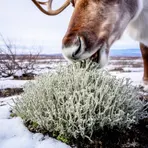
A grey, bushy lichen that grows in Arctic areas and feeds reindeer
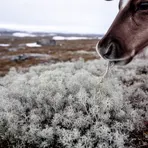
A grey bushy growth like a small plant that covers the tundra and feeds reindeer
Surface Forms
Morphology
This is a straightforward adjective + noun composition: 'Arctic' (relating to the Arctic) combined with 'moss' (a leafy nonflowering plant) yields 'a type of moss that grows in the Arctic.' A B1 learner who knows both constituents would readily infer it denotes a moss from northern/Arctic regions even if they do not know the specific species or ecological details, making it compositional and transparent.
Etymology
Arctic moss is a simple name that joins arctic (where it grows) and moss (what it is), a grey, branching plant on cold ground. Because these soft clumps are the main 'food' for reindeer and caribou in winter, the name reminds you both where it grows and why it matters.

