
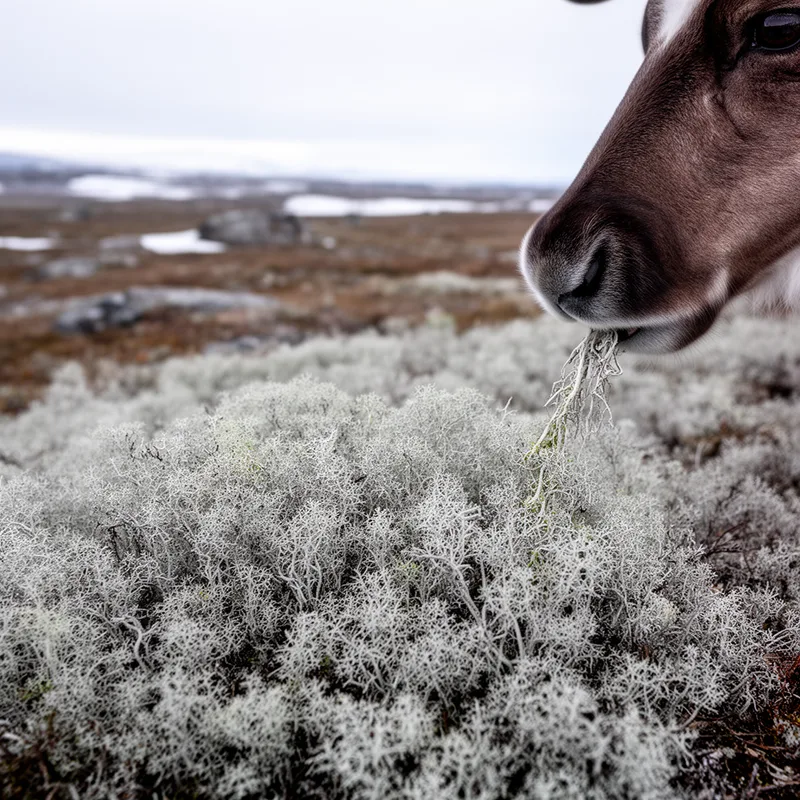
reindeer lichen
- noun
- /ˈreɪnˌdɪr ˈlaɪkən/
- Specialized
- Caribou rely on reindeer lichen as a vital food source during harsh winter months.
Examples
-
Caribou depend on reindeer lichen as their winter energy source, "cratering," or pawing through snow to reach this ground cover.
Academic text (2012) -
Along the ground grow boulder-sized clumps of reindeer lichen (Cladonia rangiferina).
Academic text (2012) -
In the Arctic landscape, reindeer lichen provides essential nutrients for grazing reindeer.
-
The greyish hues of reindeer lichen can often be seen covering the ground where reindeer roam.
Synonyms
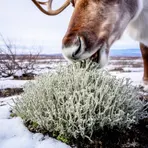
A grey, bushy lichen that grows in Arctic areas and feeds reindeer
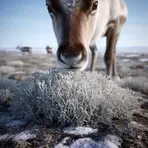
A grey, branching lichen that grows in the Arctic and feeds reindeer
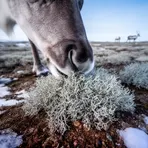
A greyish branching plantlike growth in Arctic tundra that is a main food for reindeer and caribou
Surface Forms
Morphology
This is a straightforward noun–noun composition where 'reindeer' restricts the type of 'lichen'; a B1 learner who knows both words can infer it is the lichen associated with or eaten by reindeer (found in Arctic regions). The compositional head-modifier pattern is common cross-linguistically and yields the meaning directly from the constituents.
Etymology
Reindeer lichen is named for the pale, branching lichen that grows like a carpet on the tundra and is the 'main food' of reindeer in winter, so the name links the plant to the animal that eats it.

