
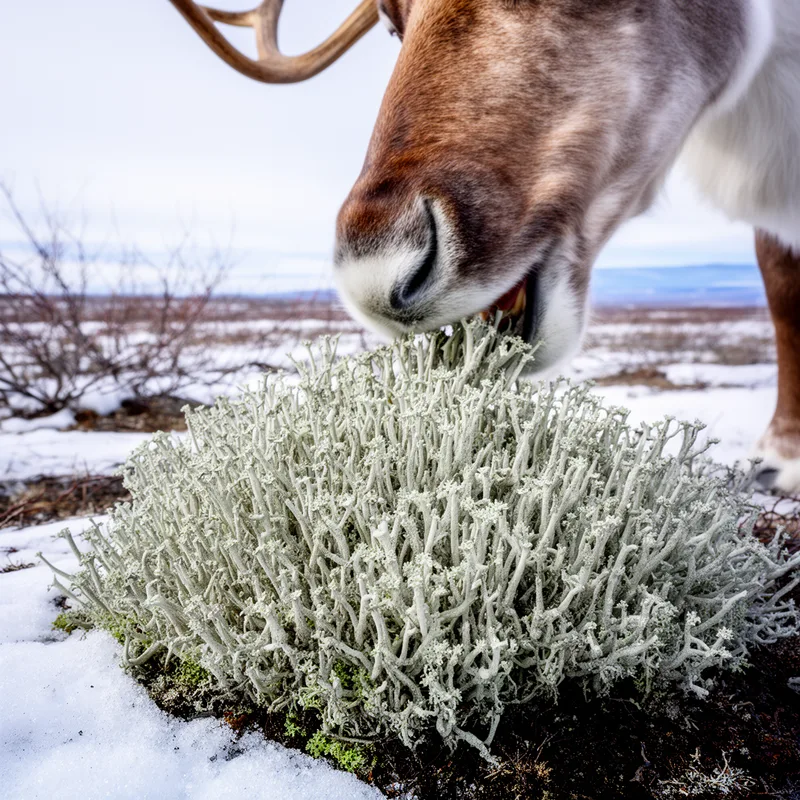
Cladonia rangiferina
- noun
- Specialized
- The vast tundra is covered with Cladonia rangiferina, which reindeer rely on for nourishment during the harsh winter months.
Examples
-
In many Arctic regions, Cladonia rangiferina is a vital food source for caribou, especially when other vegetation is scarce.
-
Along the ground grow boulder-sized clumps of reindeer lichen (Cladonia rangiferina).
Academic text (2012) -
Scientists study Cladonia rangiferina to understand its role in Arctic ecosystems and its importance for wildlife survival.
Synonyms
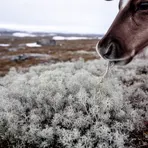
A grey bushy growth like a small plant that covers the tundra and feeds reindeer
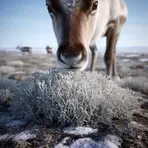
A grey, branching lichen that grows in the Arctic and feeds reindeer
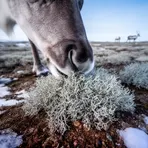
A greyish branching plantlike growth in Arctic tundra that is a main food for reindeer and caribou
Surface Forms
Morphology
Cladonia + rangiferina
This is a scientific Latin binomial: 'Cladonia' identifies a genus of lichens while 'rangiferina' is a Latin species epithet (not a standard English word and not defined here). The specific ecological meaning (an arctic lichen eaten by reindeer) is technical and cannot be predicted by a B1 learner from the constituent forms alone, so the expression is opaque.
Etymology
The lichen Cladonia rangiferina is named after rangiferina, a word that links it to 'reindeer'. Because this pale, branching lichen is the main food reindeer eat in the Arctic winter, the name helps you remember it as reindeer food.

