

aphasia
 10
9.1
10
9.1

- noun
- /əˈfeɪʒə/
- Specialized
- The therapist worked with patients suffering from aphasia to help them regain their ability to communicate.
- speaker with aphasia
- bilingual aphasia
- severe aphasia
Loading YouTube…
Watch on YouTubeBut we do lose, I think a little bit of and the name for it is aphasia when you can't remember a word, right?
- But we do lose, I think a little bit of and the name for it is aphasia when you can't remember a word, right?
- So I had aphasia all my life and then last year I flipped my car over and both dogs shot out of the window, the front window.
- The evidence is mounting that what Donald Trump is suffering from is something called fluent aphasia.
Examples
-
A 35-year-old white male, acute onset of aphasia, no history of trauma.
-
Are there distinct groups into which patients with bilingual aphasia can be categorized?
Academic text (2013) -
Some people get a specific effect of aphasia on their ability to read numbers.
-
OK, so can people with global aphasia do this task?
-
That's the word for the lack of speech after brain damage, aphasia or dysphasia.
-
For example, there were only three speakers with severe aphasia and relatively mild apraxia.
Academic text (2013) -
Each participant's type of aphasia was diagnosed by the speech-language therapist who treated him or her.
Academic text (2013) -
Education was not different between the aphasia group and the control group (p = .09).
Academic text (2013) -
Numerous studies have shown that people with aphasia still gesture spontaneously and frequently (Rose, 2006).
Academic text (2013) -
Our forced-choice studies showed that gestures by speakers with aphasia were less informative than gestures by non-aphasic speakers.
Academic text (2013)
Synonyms
 1
9.2
1
9.2
Able to speak easily but say words that do not make sense and cannot understand speech or writing


 1
9.9
1
9.9
A condition that makes it hard to speak or understand speech after brain damage
 1
7.5
1
7.5
A condition in which a person understands others but cannot speak or write well
 1
7.7
1
7.7
A problem where a person has trouble speaking or writing but can still understand others
 1
7.8
1
7.8
A speech problem where a person speaks fluently but cannot repeat words or sentences because of brain damage
 1
9.7
1
9.7
A condition that makes it hard to say or recognize common object names

A complete loss of the ability to speak or understand language

A severe loss of almost all ability to understand and use language after brain damage

A condition in which a person speaks smoothly but their words have little meaning and cannot understand speech or writing

A condition where a person speaks in long sentences that do not make sense and cannot understand speech or writing

Fluent speech that has little meaning and very poor understanding of what others say or write

Talking that sounds normal but uses wrong words and makes understanding language hard

A problem where a person cannot easily say or write words but can understand others

A condition after a stroke that makes speaking and writing very hard while understanding often stays good

A problem that makes a person unable to understand written words despite normal eyesight

A problem where a person cannot understand speech even though hearing is normal

A condition in which a person cannot understand speech despite normal hearing
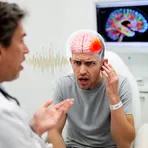
A condition that makes it hard to understand spoken language despite normal hearing due to brain damage
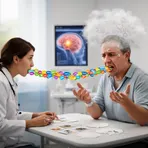
A language problem after brain damage that hurts speaking and understanding but often lets people repeat words

A language problem where a person cannot repeat spoken sentences though they understand speech

Severe trouble speaking and writing after brain damage such as a stroke
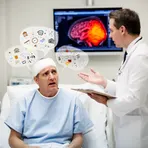
A condition in which a person cannot form clear sentences after brain injury

A language problem that makes you unable to name objects or people

Difficulty naming objects in speech or writing
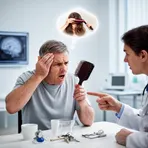
A condition that makes it hard to find names of objects while the person still understands speech
Antonyms

Compounds
- Specialized
1
9.2
Able to speak easily but say words that do not make sense and cannot understand speech or writing
- Specialized
1
7.5
A condition in which a person understands others but cannot speak or write well
- Specialized
1
7.8
A speech problem where a person speaks fluently but cannot repeat words or sentences because of brain damage
- Specialized
1
7.7
A problem where a person has trouble speaking or writing but can still understand others
- Specialized
1
9.7
A condition that makes it hard to say or recognize common object names
- Archaic
A condition in which a person cannot understand speech despite normal hearing
- Specialized
A condition that makes it hard to find names of objects while the person still understands speech
- Specialized
A language problem where a person cannot repeat spoken sentences though they understand speech
- Specialized
Severe trouble speaking and writing after brain damage such as a stroke
- Specialized
A condition that makes it hard to understand spoken language despite normal hearing due to brain damage
- Specialized
Talking that sounds normal but uses wrong words and makes understanding language hard
- Specialized
A problem where a person cannot easily say or write words but can understand others
- Specialized
A severe loss of almost all ability to understand and use language after brain damage
- Specialized
Fluent speech that has little meaning and very poor understanding of what others say or write
- Specialized
A condition after a stroke that makes speaking and writing very hard while understanding often stays good
- Specialized
A condition where a person speaks in long sentences that do not make sense and cannot understand speech or writing
- Specialized
A language problem after brain damage that hurts speaking and understanding but often lets people repeat words
- Specialized
A problem that makes a person unable to understand written words despite normal eyesight
- Specialized
A condition in which a person speaks smoothly but their words have little meaning and cannot understand speech or writing
How Severe

Surface Forms
Morphology
aphasia = phasia (opaque) = a + phasia
Though analyzable as a- (not) + phasia (speech), 'phasia' is a medical combining form not a familiar standalone word, so an average B1 learner cannot reliably derive the meaning.
Etymology
Aphasia comes from Greek parts a- meaning 'without' and phasia meaning 'speech', the same root as the common word phrase. So aphasia is 'without speech', which explains why it describes the loss of the ability to use or understand language after brain damage.