
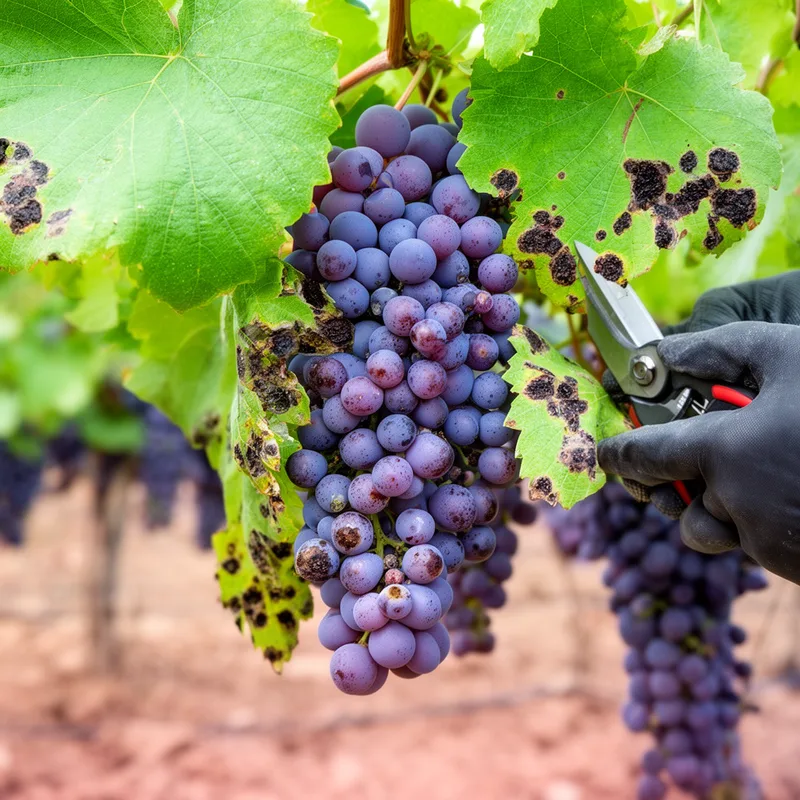
anthracnose
- noun
- /ˈænθrəkˌnoʊs/
- Specialized
- Under certain environmental conditions, epidemics of anthracnose can cause 60% cucumber yield loss (Thompson and Jenkins 1985; Wehner and St. Amand 1995).
- anthracnose disease
Examples
-
Thus, it seems that the anthracnose resistance in most, if not all, US modern cucumber varieties originated from PI 197087.
Academic text (2018) -
The two anthracnose-resistant lines, Gy14 and WI 2757, were used to develop segregating populations in the present study.
Academic text (2018) -
ARS scientists are still fighting another major strawberry disease: anthracnose.
Academic text (1994) -
In our preliminary experiments, both 9930 and TL were highly susceptible to anthracnose infection.
Academic text (2018) -
Anthracnose, rust, bean common mosaic, and common blight are among the world's most economically significant bean diseases.
Academic text (2006) -
In a large-scale screening test for anthracnose resistance, Wehner and St. Amand (1995) observed that most anthracnose resistant lines were improved cultivars or breeding lines of U.S. origin.
Academic text (2018) -
If left untreated, anthracnose can cause severe damage to fruit trees.
-
Gardeners should be aware that anthracnose often appears as dark lesions on their plants.
-
To prevent anthracnose, it's crucial to ensure proper air circulation around your plants.
How Severe
- Specialized


 1
9.2
1
9.2

- Specialized
Surface Forms
Etymology
Anthracnose comes from Greek parts anthrax meaning 'coal', as in the English word anthracite, and nosos meaning 'disease'. So anthracnose is a 'coal disease' and is named for the dark, coal-like spots the fungus makes on leaves, stems, or fruit.