
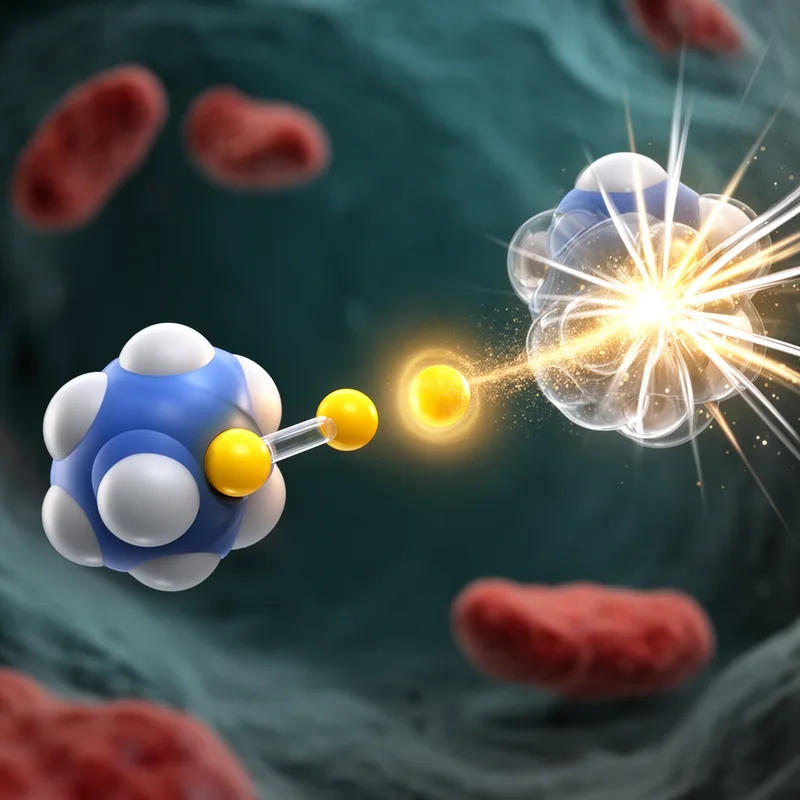
adenosine diphosphate
- noun
- /ˌædəˈnoʊsiːn daɪˈfɔsfeɪt/
- Specialized
- In muscles, adenosine diphosphate ADP accumulates as ATP is used up, signaling the need for more energy production.
Loading YouTube…
Watch on YouTubeIt gets cleaved to ADP, adenosine diphosphate plus an inorganic phosphate, right?
- It gets cleaved to ADP, adenosine diphosphate plus an inorganic phosphate, right?
- We take adenosine diphosphate, ADP and we add a phosphorus to it to make it ATP, and then we run all of our
Examples
-
The reaction cycle is completed with the release of the hydrolysis product, adenosine diphosphate (ADP).
Academic text (2006) -
During cellular respiration, adenosine diphosphate ADP plays a crucial role in the transfer of energy between molecules.
-
We take adenosine diphosphate, ADP and we add a phosphorus to it to make it ATP, and then we run all of our
-
It gets cleaved to ADP, adenosine diphosphate plus an inorganic phosphate, right?
-
Adenosine diphosphate ADP is produced when adenosine triphosphate (ATP) loses a phosphate group during its conversion.
Synonyms
 1
6.8
1
6.8

A small molecule with two phosphate groups that cells use to store and release energy
Surface Forms
Morphology
This is a strictly compositional chemical name: 'adenosine' plus 'diphosphate' literally denotes an adenosine molecule with two phosphate groups. The meaning follows standard scientific naming conventions (and similar patterns across languages), so a learner who knows the constituent terms can directly infer the MWE meaning.
Etymology
Adenosine diphosphate names what it is: adenosine plus two phosphate groups, and the word diphosphate means 'two phosphates'. Think of ATP as a charged cell 'battery' with three phosphates; when it loses one phosphate it becomes adenosine diphosphate, and that change gives the cell the 'energy' it needs.