
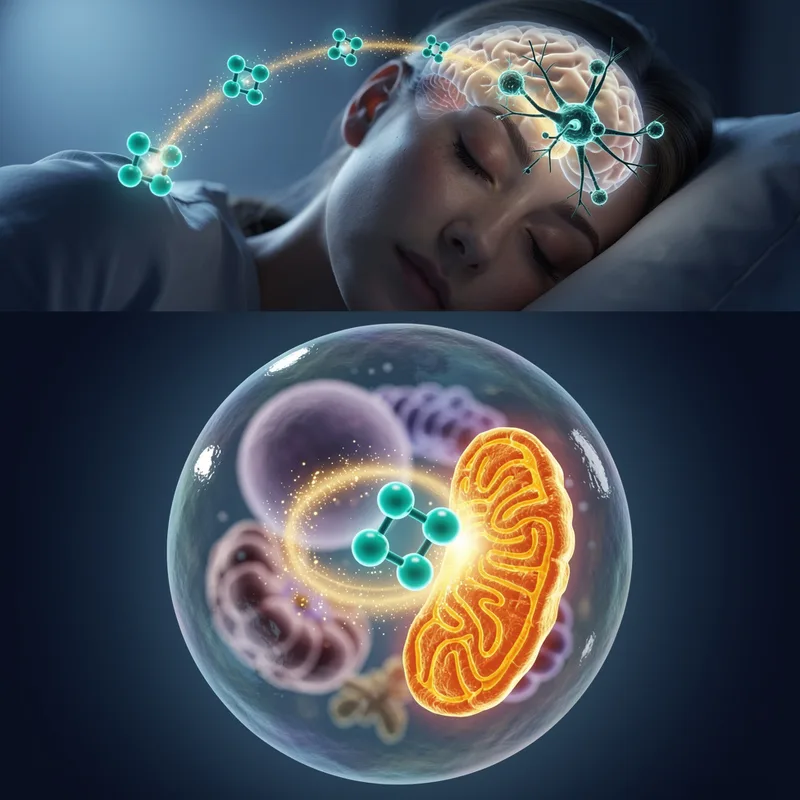
adenosine
 3
7.7
3
7.7

- noun
- /ˌædəˈnoʊsiːn/
- Specialized
- Adenosine is essential for energy transfer in all living cells, especially in the form of adenosine triphosphate (ATP).
- adenosine triphosphate
- adenosine triphosphatase
Loading YouTube…
Watch on YouTubeThe problem, however, is that while caffeine is in your system, it doesn't mean that the adenosine stops building up.
- The problem, however, is that while caffeine is in your system, it doesn't mean that the adenosine stops building up.
- But heating via exercise stimulates ATP release and increases adenosine and signaling of sleep regulating cytokines.
- So when we block adenosine, we basically stimulate the system and we stimulate our brains.
- And that caffeine races in it, latches onto the adenosine receptors and blocks the signal of adenosine.
- But what I didn't tell you is that when we sleep, the brain gets the chance to essentially clear out that adenosine.
- When the caffeine leaves your system, which takes a while to do, all that adenosine that's been building up comes in, and so you're more tired than you were before.
- We take adenosine diphosphate, ADP and we add a phosphorus to it to make it ATP, and then we run all of our
- It's the same process of adenosine clearance.
- There is a lot of or some residual adenosine present.
- And I think it really points to the fact that circadian rhythm, clearance of adenosine temperature modulation.
- You have adenosine triphosphate energy, the energy currency as what we call and then you have NADNADH ratio which changes the pH of the cell.
- So we don't know how long we've been awake and we don't feel the signal that we're sleepy, but it doesn't caffeine doesn't help us to change free adenosine back to ATP.
- ATP, adenosine triphosphate or also known as ATP or energy chemical.
Examples
-
Adenosine diphosphate (ADP) with a purity over 98% was purchased from Sigma (USA).
Academic text (2014) -
Moreover, applying the adenosine receptor antagonist, caffeine or DPCPX, attenuated the injury of neuroblastoma cells induced by aluminum chloride.
Academic text (2018) -
It's the same process of adenosine clearance.
-
Or the ATP can be broken down to adenosine and that can also have similar effects.
-
Basically, caffeine first thing in the morning traps adenosine in your brain.
-
The problem, however, is that while caffeine is in your system, it doesn't mean that the adenosine stops building up.
-
So when we block adenosine, we basically stimulate the system and we stimulate our brains.
-
Caffeine works by way of racing into the system, and it latches on to those adenosine receptors.
-
The effects of caffeine on the human body are generally attributed to the cerebral adenosine receptors.
Blog text (25) -
The reaction cycle is completed with the release of the hydrolysis product, adenosine diphosphate (ADP).
Academic text (2006)
Compounds

- Specialized

 1
4.8
1
4.8
A small molecule in cells that stores energy for cells to use

- Specialized
A protein in animals that changes the chemical adenosine into inosine
- Specialized
A small molecule with two phosphate groups that cells use to store and release energy

- Specialized
A small molecule in cells that helps store and transfer energy
Surface Forms
Morphology
Etymology
The word adenosine starts with aden-, from Greek aden meaning 'gland', and the ending -osine shows it is a base joined to a 'sugar'. So adenosine names a small chemical made of adenine plus a sugar that cells use for energy and signals, which is why it helps explain sleep and tiredness.