
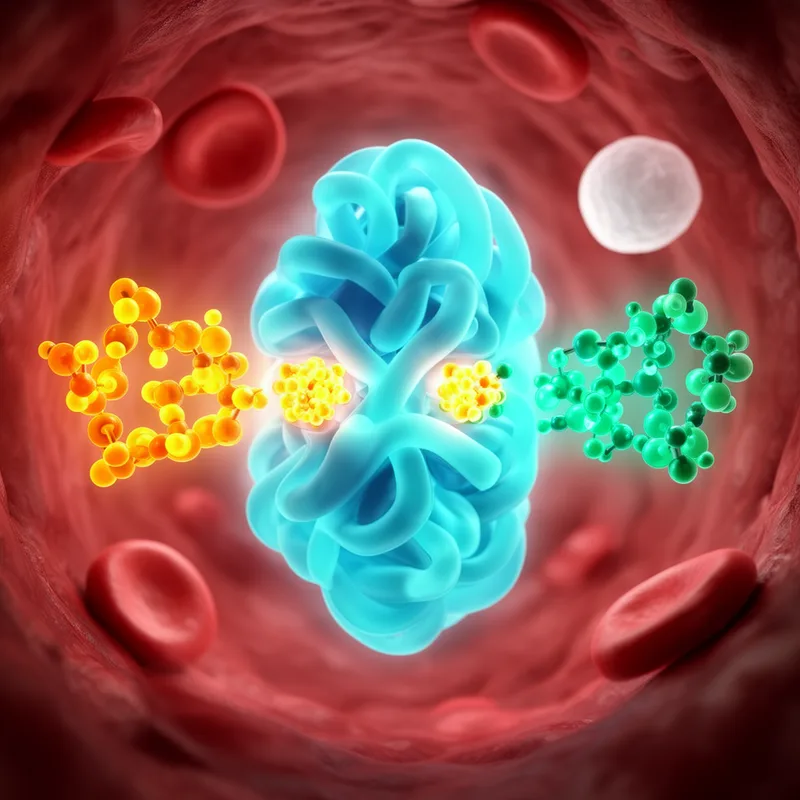
adenosine deaminase
- noun
- /ˌædəˈnoʊsiːn dɪˈæmɪneɪs/
- Specialized
- Researchers are studying the role of adenosine deaminase in immune system regulation.
Examples
-
The doctor ordered a test to measure adenosine deaminase levels in the patient's blood sample.
-
The adenosine deaminase enzyme plays a crucial role in purine metabolism.
-
Adenosine deaminase deficiency can lead to severe combined immunodeficiency in humans.
-
Researchers are studying adenosine deaminases for their potential in gene therapy.
-
Children with a genetic disorder often lack sufficient adenosine deaminase, leading to severe immunodeficiency.
-
Researchers studied the role of adenosine deaminase in breaking down adenosine to understand its effects on cell metabolism.
-
A lack of adenosine deaminase can result in a buildup of toxic metabolites in the body.
Synonyms

 19
8.9
19
8.9

An enzyme in the body that breaks down adenosine into inosine and ammonia

An enzyme that removes an amino group from an amino acid or molecule
Surface Forms
Morphology
The term is directly compositional: adenosine (a specific nucleoside) + deaminase (an enzyme that removes an amino group) yields an enzyme that removes an amino group from adenosine. This is a regular scientific noun‑noun compound formation found across languages, so a learner who knows both constituents can readily infer the MWE meaning.
Etymology
Adenosine deaminase literally says what it does: adenosine is a small molecule in cells and deaminase is an enzyme that removes an 'amino' part. So, the name refers to an enzyme that takes away an 'amino' group from adenosine, which is why we use this word today.