
ADA
 19
8.9
19
8.9

- noun
- /ˈeɪdiˌeɪ/
- Specialized
Examples
-
We now turn to an analysis of the ADA in relation to drivers with low vision.
Academic text (2004) -
In 1990, Congress passed the ADA to protect disabled individuals.
Academic text (2003) -
Part I analyzes the text and purpose of the ADA.
Academic text (2017) -
Burkhauser and Stapleton did not find evidence that the ADA is responsible for the decline in employment.
Academic text (2004) -
Changes in Medicaid coverage that adversely affect residents with disabilities should also be analyzed under the ADA.
Academic text (1994) -
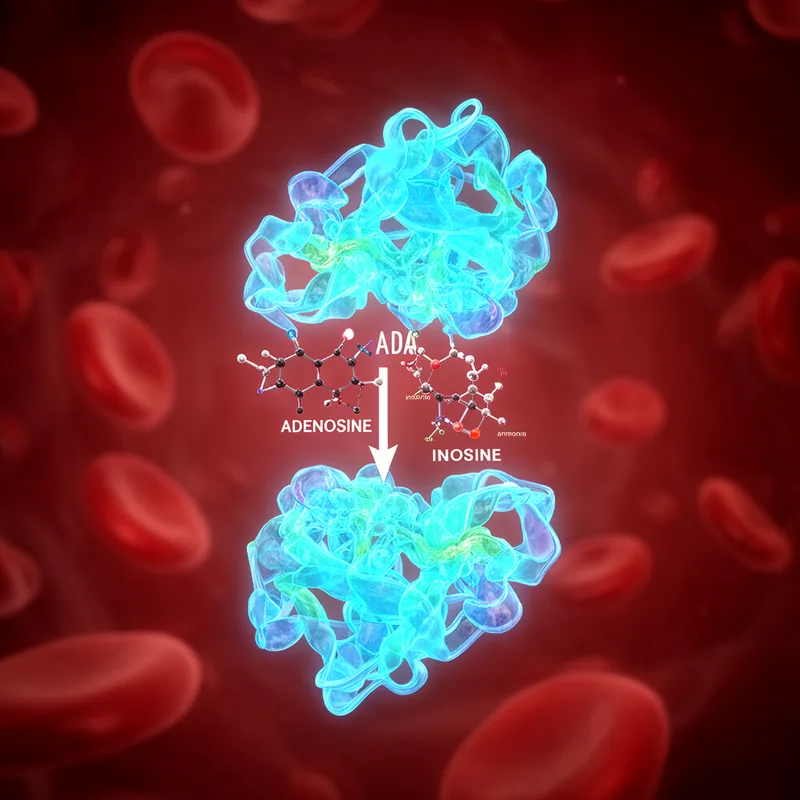
The enzyme ADA plays a crucial role in breaking down adenosine in the human body.
-
Doctors study ADA to understand its effects on purine metabolism.
-
Inadequate levels of ADA can lead to serious health problems in mammals.
Synonyms

A protein in animals that changes the chemical adenosine into inosine
Compounds

- Specialized
A serious illness from birth that makes the immune system not work because of a gene change
Surface Forms
Etymology
ADA is a short form of adenosine deaminase, where adenosine is the molecule and deaminase means 'remove an amino part'. So ADA is the enzyme that changes adenosine in the body and helps keep the immune system working.