
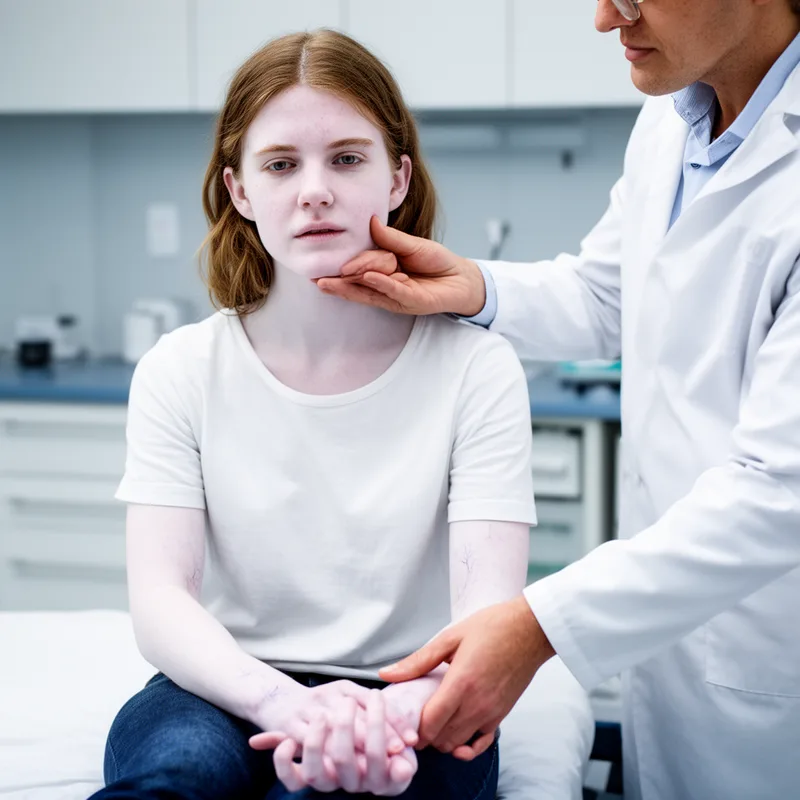
achromasia


 1
9.9
1
9.9
- noun
- /ˌeɪkrəˈmeɪziə/
- Specialized
- Says here that she was suffering from achromasia-albinism.
Examples
-
After the fall, his skin showed signs of achromasia, indicating bruising from the impact.
-
The doctor explained that achromasia can occur due to various health conditions.
-
In moments of extreme fear or shock, she experienced achromasia, her face losing its usual color.
Synonyms
 6
8.3
6
8.3
A very pale look to the skin that shows illness or shock
 3
4.3
3
4.3
A face that looks very light in colour because of illness, fear, or lack of sun
 1
9.9
1
9.9
An unnatural pale look in the skin after injury, illness or strong emotion
 1
8.8
1
8.8
A part of the skin that is lighter than normal because it has less color

An unnatural paleness of the skin from bruising, illness, or shock

An unusual change of skin color to pale blue often caused by a bruise, illness or strong emotion

A paleness of the skin caused by illness or strong emotion

A condition where the skin looks very pale because of illness or shock

A pale look showing little normal color in the skin
A lack of colour in the skin or in red blood cells
Antonyms

How Pale
- Specialized
1
8.2

- Specialized
1
9.9
6
8.3
3
4.3
- US
32
1.7
Surface Forms
Morphology
achromasia = chromasia (semi-transparent) = a + chromasia
Formed by the negative prefix 'a-' added to 'chromasia' ('coloration'); the parts indicate 'absence of color', but the term is a specialized medical word and not immediately obvious to general learners.
Etymology
Achromasia comes from a- meaning 'without' and chrom meaning 'color', the same root you see in monochrome. So achromasia describes a condition of 'without color' when the skin looks unusually pale or has a loss of color.