
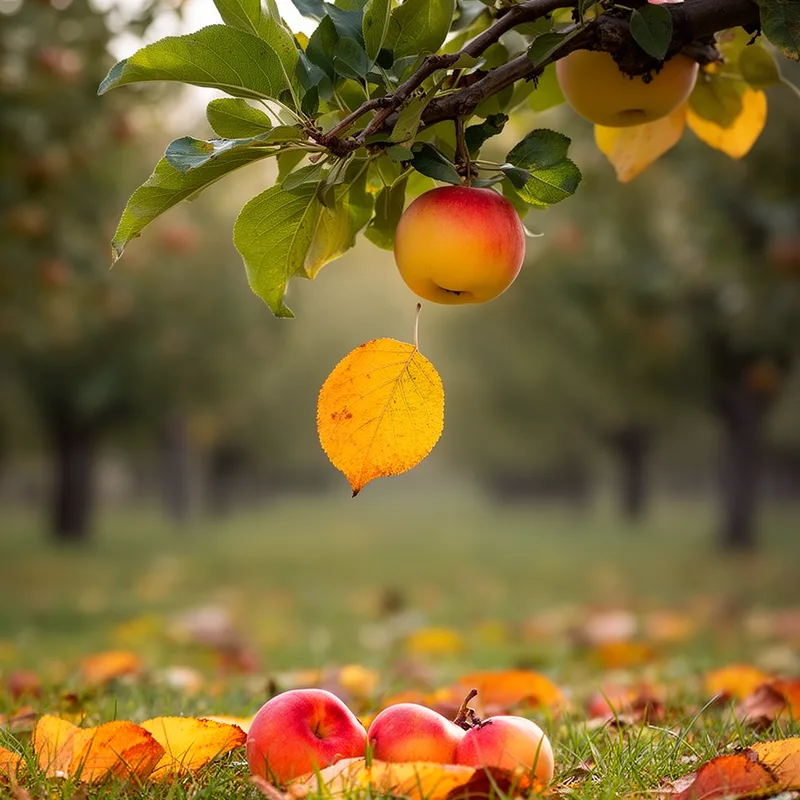
to abscise
- verb
- /æbˈsaɪz/
- Specialized
- The flowers will abscise once they have bloomed and are no longer needed.
Examples
-
Plants often abscise their fruit when it becomes overripe to allow for new growth.
-
PHOTO (COLOR): In studying ways to increase yield by reducing the number of flowers and pods that prematurely drop, or abscise, plant molecular biologist Mark Tucker examines the pod set of a healthy soybean plant.
Academic text (1996) -
In autumn, many trees abscise their leaves to prepare for winter.
Synonyms

 53
3.5
53
3.5

To come out and drop from where it grew or was held
Having no leaves after insects or chemical spraying
Surface Forms
Morphology
abscise = abscission (opaque) = ab + scise
The verb relates to the learned noun 'abscission' and contains the combining element 'scise', which is not a familiar standalone English base for average learners.
Etymology
The word abscise comes from Latin parts ab- 'away' and scindere 'to cut', the same root as scissors, so to abscise is to 'cut away' or let a plant 'drop off' leaves or fruit.