
Uralic language


 1
9.5
- noun
- /ˈjʊrəlɪk ˈlæŋɡwɪdʒ/
- Specialized
- Hungarian is the most widely spoken Uralic language.
Examples
-
Hungarian belongs to the Uralic language family rather than the Indo-European group.
-
Finnish is an example of a Uralic language still widely spoken today.
-
Estonian is a Uralic language with its own unique grammar and vocabulary.
-
Finnish is a Uralic language spoken in Finland.
-
Finnish and Hungarian are well-known Uralic languages that share similar roots and features.
-
Many linguists study how Uralic languages differ from Indo-European languages in structure and vocabulary.
-
Estonian is another example of a Uralic language spoken in northern Europe, alongside Finnish.
Synonyms
 19
9.9
A language spoken by the Sámi people in northern Scandinavia and northwest Russia
 1
8.6
The language spoken by the native people of northern Scandinavia and parts of Russia
 1
9.9
A language spoken by the Samoyed people in northwestern Siberia
 1
9.9
A language spoken by the Sámi people in northern Europe

The official language spoken in Estonia
A language spoken by a native people living in northern Siberia
A language spoken by the Entsi people of Siberia
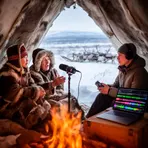
A language that the Nenets people once spoke in northern Siberia

A language that the Selkup people speak in northern Russia

A language spoken by the Selkup people in Siberia
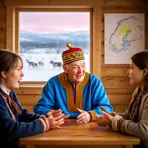
A language spoken by the Sami people in northern Europe

Languages spoken by the Sámi people in northern Scandinavia, Finland, and Russia
Surface Forms
Morphology
The phrase is fully compositional: 'Uralic' identifies a particular language family and 'language' names a spoken/written system, so a learner who knows both constituents can infer that a 'Uralic language' is a language belonging to the Uralic family. This noun phrase follows a standard modifier + head pattern common across languages, making the meaning predictable to B1 learners familiar with the parts.
Etymology
Uralic language comes from the name of the 'Ural Mountains', because many of these languages were first noticed near that mountain range. Early language scholars saw that Finnish, Hungarian and Estonian had similar words and grammar and lived in that area, so calling them Uralic meant they were 'a group of related languages', which is why Uralic language refers to those languages today.