

Swiss stone pine
- noun
- UK
- The Swiss stone pine is valued for its beautiful wood and edible seeds.
Examples
-
During our hike, we admired the tall Swiss stone pine trees dotting the alpine slopes.
-
Cooks use nuts from the Swiss stone pine to add flavor to traditional European dishes.
-
The Swiss stone pine grows tall in the Alps.
-
I saw a Swiss stone pine in the park yesterday.
-
Many chefs appreciate the rich flavor of nuts harvested from the Swiss stone pine.
-
On our trip to the mountains, we encountered numerous Swiss stone pine trees, known for their tall stature.
-
The Swiss stone pine provides both shelter for wildlife and seeds that are nutritious for humans.
Synonyms
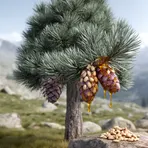
A large European pine with clusters of five needles that makes edible nuts and sticky resin

A large mountain pine with clusters of five needles and small edible seeds
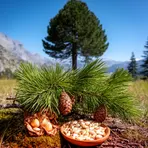
A large European pine tree with groups of five needles and edible nuts

A large pine tree from the high Alps that makes edible seeds called cembra nuts
Surface Forms
Morphology
The phrase is compositionally transparent: 'Swiss' indicates origin/association and 'stone pine' names a type of pine tree, so together they denote a pine tree associated with Switzerland. A B1 learner who knows the constituent words would understand this as a kind of pine tree (even if they may not know the exact botanical details).
Etymology
Swiss stone pine gets its name from where it grows and from its hard seeds. The tall pine grows on Swiss mountain slopes and makes very hard, stone-like seeds that people eat, so the name means a Swiss mountain 'tree' with hard seeds you can eat.

