
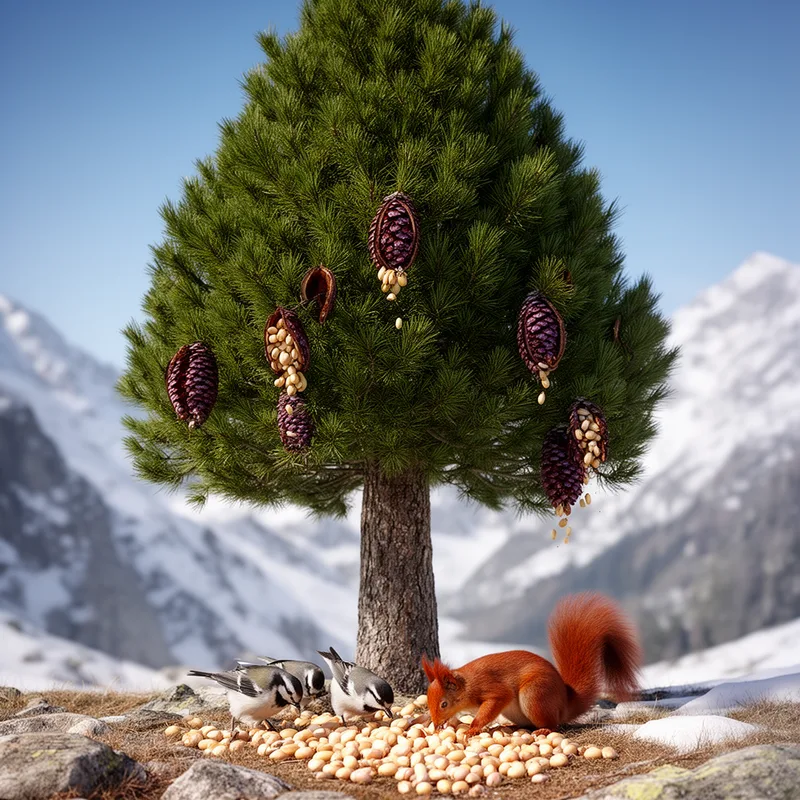
cembra nut tree
- noun
- The cembra nut tree thrives in the high Alps and produces nutritious seeds known as cembra nuts.
Examples
-
Many birds and mammals feed on the seeds of the cembra nut tree during the winter.
-
The resin extracted from the cembra nut tree has been traditionally used for medicinal purposes.
-
The cembra nut tree thrives in mountainous regions.
-
Many cembra nut trees can be found in the Alps.
-
The cembra nut tree produces edible seeds that are a favorite food for local wildlife.
-
In the high Alps, the cembra nut tree grows well, providing nutritious cembra nuts.
-
The cembra nut tree is known for its tall stature and clusters of five needles.
Synonyms
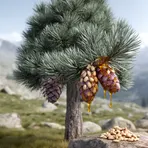
A large European pine with clusters of five needles that makes edible nuts and sticky resin
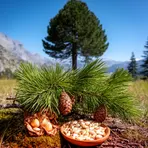
A large European pine tree with groups of five needles and edible nuts
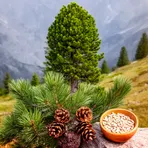
A large tree from central Europe with groups of five needles and edible seeds

A large mountain pine with clusters of five needles and small edible seeds
Surface Forms
Morphology
The components 'nut' and 'tree' make it clear this is a nut-bearing tree, so a learner can grasp the general idea of a tree that produces nuts. However, 'cembra' is a specific species name (not a transparent English lexical item) and the precise botanical sense and extra details (Pinus cembra, five-needle clusters, resinous sap) are not derivable from the parts, so full meaning requires prior exposure or background knowledge.
Etymology
Cembra nut tree comes from a simple image: it is a pine tree that makes edible cembra nuts and a sticky sap called 'resin'. That's why the name points to the tree's useful nuts and sap, which people used for food and medicine.

