
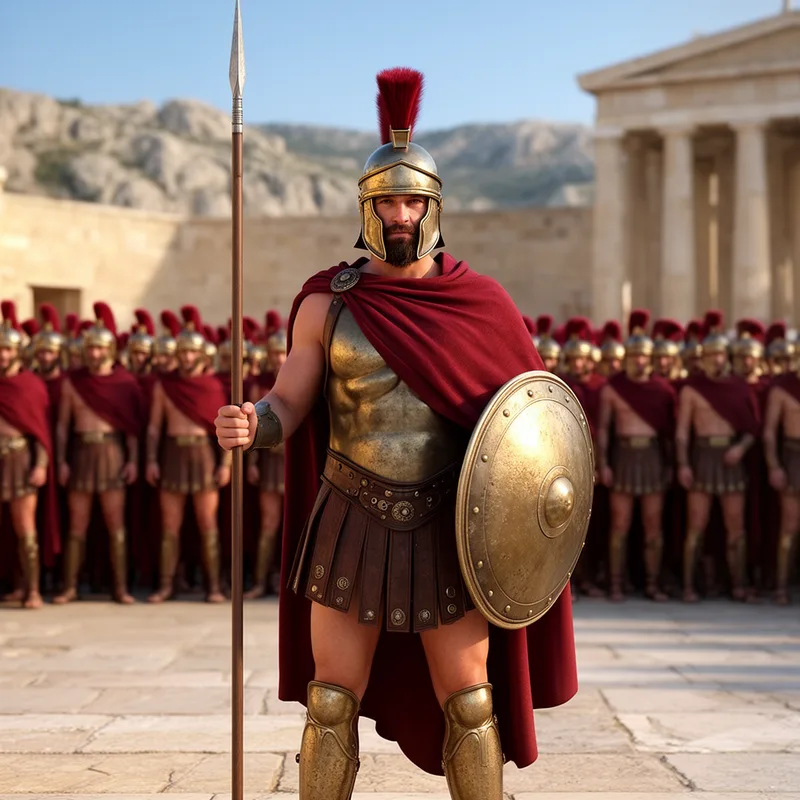
Spartan
 7
7.2

- noun
- /ˈspɑrtən/
- The Spartans were known for their military prowess and discipline in ancient Greece.
Loading YouTube…
Watch on YouTubeHe'll be like, well, screw this, you know, and he defects and he goes over to the Spartans.
- He'll be like, well, screw this, you know, and he defects and he goes over to the Spartans.
Examples
-
In the battle of Thermopylae, a small group of Spartans faced a much larger Persian army.
-
At the top of the list, the Lacedaemonians, another name for the Spartans, followed by the Athenians and Corinthians.
-
I will go and seek the help of the great spartans.
-
Long enough for the spartans to unite Greece.
-
With the spartans at the hot gates, our victory is assured.
-
King Agus once said, Spartans do not ask how numerous their opponents are.
-
At great cost to the Persians, the Spartans and their king Leonidas were killed.
-
Seeing the Spartans retreating, Allied phalanxes left the field.
-
So the only thing standing between Athens and total annihilation is leonidas and 300 spartans.
-
Legend has it that a Spartan soldier could endure great hardships without complaint.
Synonyms
 136
1.0
A person from Greece

 1
9.9
Someone or something from ancient Sparta in Greece
Surface Forms
Morphology
Etymology
Spartan comes from the ancient Greek city called Sparta, whose people were famous for strict training and a very simple life. So a Spartan was a person from Sparta, and today the word often means someone who is 'brave' or lives in a 'simple' and 'strict' way.