

Spartan
 8
7.8

- adjective
- /ˈspɑrtən/
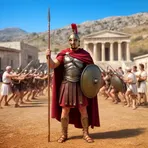
- The Spartan warriors were known for their discipline and bravery in battle.
- Spartan woman
Examples
-
Agus, one of the two Spartan kings, was also keen to avoid conflict, continuing in the long Spartan tradition of restraint and introversion.
-
I come to you as a Spartan woman.
-
Today, let us take a closer look at the Spartan Royal Guard.
-
That is Spartan law, and by Spartan law we will stand and fight and die.
-
That is always a difficult time for a Spartan mother.
-
The heat on the field is brutal, but this Spartan team has come to play.
-
Spartan military leaders, for instance, could not engage in long wars without risking rebellions at home.
Academic text (1990) -
Go tell the Spartans passerby that here, obedient to Spartan law, we lie.
-
Spartan women shook off expressions of sympathy in words that bespeak an unshakable civic identity.
Academic text (1991) -
Sumter, S.C., native Brittany Starling is another incoming freshman for the Spartan women, a 6-foot-1 forward from Sumter High School.
Blog text (34)
Synonyms

 1
9.9
Someone or something from ancient Sparta in Greece
Surface Forms
Morphology
Etymology
Spartan comes from the ancient Greek city called Sparta, known for brave soldiers and a plain, careful life. So when we call something Spartan now, we mean it is 'simple', 'plain', or 'strict', like the life of Sparta.