
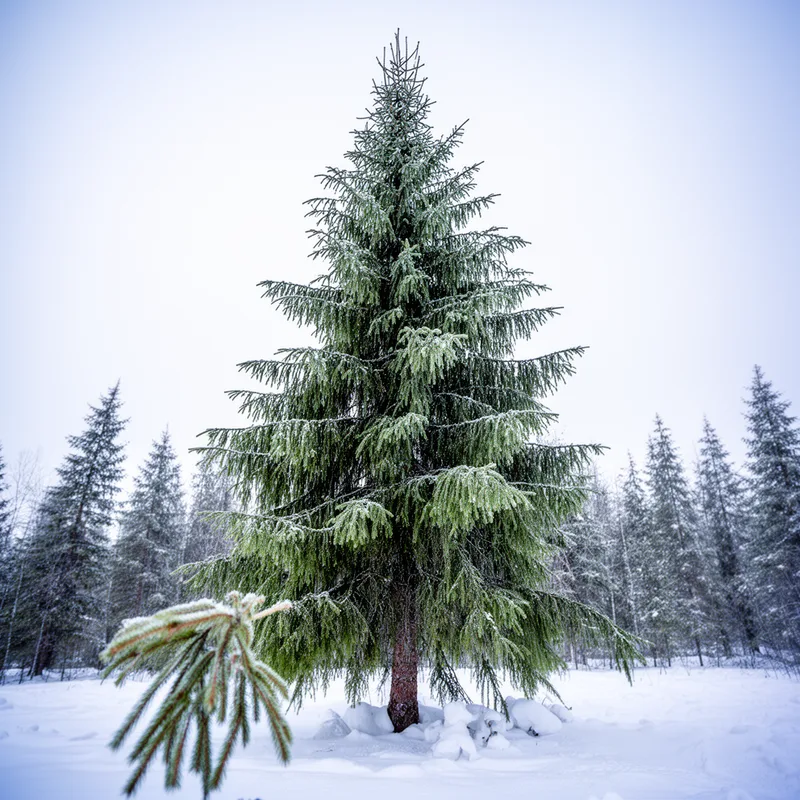
Siberian spruce
- noun
- /ˌsaɪˈbɪəriən spruːs/
- The Siberian spruce can withstand extremely cold winters, making it a popular choice for reforestation projects in harsh climates.
Examples
-
Needles of the Siberian spruce are slightly longer than those of the Norway spruce.
-
The Siberian spruce is known for its tall stature.
-
Foresters noted that the Siberian spruce grows rapidly in the taiga regions.
-
Many Siberian spruces grow in the cold climates of Russia.
-
The Siberian spruce is often used for timber because of its straight, tall trunk.
-
In northern climates, the Siberian spruce thrives due to its ability to endure freezing temperatures.
-
Landscape architects frequently recommend the Siberian spruce for parks and gardens in cold regions.
Synonyms
A tall spruce tree that grows in cold areas of northern Europe and Asia
How Tall


Surface Forms
Morphology
The meaning 'a spruce tree from Siberia' is directly and transparently derived from combining 'Siberian' (from Siberia) with 'spruce' (a type of tree). This location-adjective + noun composition is cross-linguistically common and follows standard noun phrase patterns, so a B1 learner who knows both constituents will readily infer the MWE's meaning.
Etymology
Siberian spruce is a name that links a place and a tree: Siberian shows it comes from 'Siberia', and spruce is a tall evergreen tree. So the name helps you remember it is a tall spruce that grows in very cold, northern places and can live through long, cold winters.