
Siberian
 22
5.1
22
5.1

- adjective
- /saɪˈbɪr.i.ən/
- The Chukchee, a Paleo-Asiatic people of the Siberian northeast, have a custom of giving dolls to the bride.
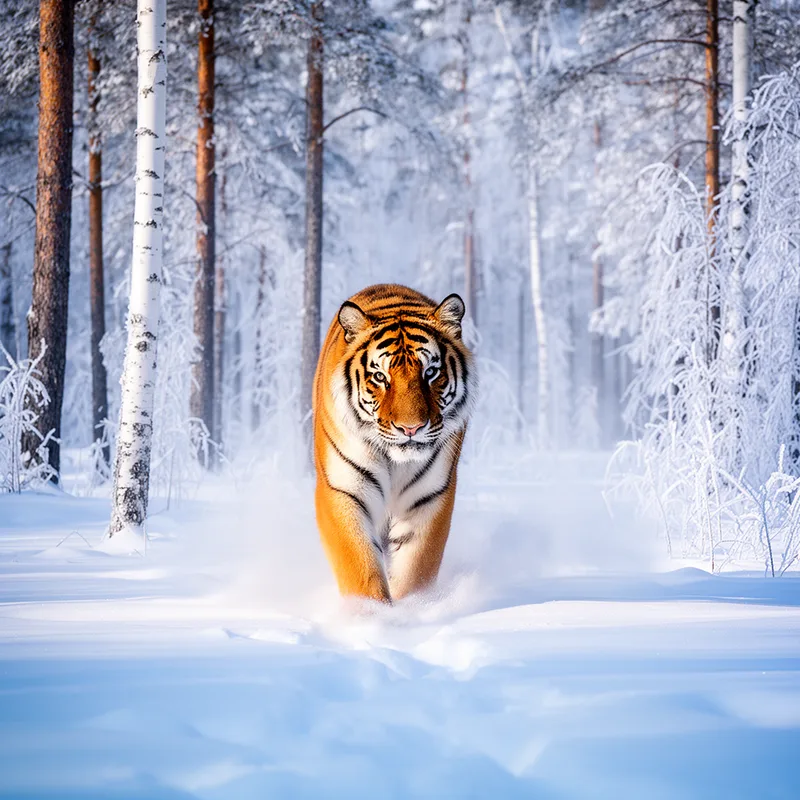
- Siberian tiger
- Siberian shaman
- Siberian shamanism
Loading YouTube…
Watch on YouTubeThe title in English is something like the prose of the Trans Siberian Railway.
- The title in English is something like the prose of the Trans Siberian Railway.
- Oh, pups and her Siberian Husky.
- It is day three on the Trans Siberian Railway.
- Stalin is in eastern Siberian exile.
- No, turns out they came from a bunch of Siberian folks who were walked across the Aleutian Strait.
- You notice that they, they make their way back to Britain, not by ship, but by the Trans Siberian Railway.
- So you know, like ginseng, Siberian ginseng, maca, ashagandha, all those buzzwords out there.
- I think it's basically Siberian ceviche and it comes with soy sauce.
- Me, Mom, me Curtain and her Siberian Husky.
- She we have this Siberian Husky.
- How did your shaved, homosexual Siberian Husky relate to all this?
- This dog is going to be the Husky, Siberian Husky.
Examples
-
It's a Siberian custom to resolve disputes.
-
As he approached the edge of the Siberian forest, Bold heard someone call to him from a small hut.
Fiction book (2000) -
A lot of Siberian tigers.
-
Only limited studies have been done among Siberian populations; however, these have failed to find the virus.
Academic text (1993) -
OK, yes, the Siberian iris are awesome in the landscape.
-
Many Indians do not believe that they crossed the Siberian land bridge to North America.
Academic text (1996) -
Today they survive only among the Siberian hunters and reindeer breeders we had come to visit.
Academic text (1993) -
Currently, there are approximately 250 Indian, 200 Siberian, and 40 Sumatran tigers in North American zoos.
Academic text (1992) -
Tanya and Galia were Siberian, or more properly, Amur tigers (the subspecies Panthera tigris altaica).
Academic text (2011) -
The Siberian climate can be extremely harsh, with long winters and short summers.
Compounds


A group of islands in the Arctic Ocean north of Siberia, east of the Laptev Sea

A medium-sized tree with soft bright-green needles that fall in autumn, used for its wood and in gardens
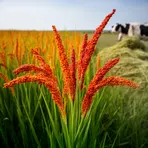

A large spiny shrub with groups of yellow flowers often planted to block wind or make a hedge

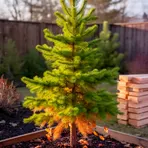
A tall evergreen tree from northern Europe and Asia with long needles that survives very cold winters

A plant that lives for two years or less and has groups of bright orange-yellow flowers at stem ends
Surface Forms
Morphology
Siberian = Siberia (transparent) = Siberi + an
Adjectival form created from the place name 'Siberia' with the regular suffix '-an', a predictable pattern for place-derived adjectives.
Etymology
Siberian comes from the place name Siberia in Russia, which probably comes from a local Turkic word or a tribe name. That's why Siberian means 'relating to Siberia', its people, culture, or natural places.