

Siberian pea tree
- noun
- Clusters of yellow flowers cover the Siberian pea tree each spring, attracting pollinators.
Examples
-
The Siberian pea tree is often planted as a windbreak in rural gardens.
-
Farmers value the Siberian pea tree for its hardiness and decorative appearance.
-
The Siberian pea tree thrives in cold climates.
-
Many gardeners choose the Siberian pea tree for its hardiness.
-
In early summer, the Siberian pea tree blooms with vibrant yellow flowers that attract many bees.
-
The Siberian pea tree makes an excellent hedge due to its dense foliage and resilient nature.
-
Local gardeners often recommend the Siberian pea tree for its beauty and ability to withstand harsh winter conditions.
Synonyms

A large thorny shrub with groups of bright yellow flowers often grown as a hedge or windbreak
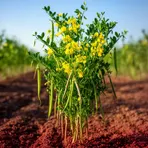
A small bush or tree with pairs of small leaves, yellow flowers, and thin seed pods
Surface Forms
Morphology
The noun phrase is compositionally built from 'Siberian' (from Siberia) + 'pea' (a pea plant) + 'tree' (a woody plant), so a B1 learner who knows the constituents will readily infer it refers to a plant/tree from Siberia related to peas. Botanical specifics (e.g., that it is a spiny shrub rather than a climbing pea) are specialized knowledge, but the basic referent is transparently derived from the parts and follows common noun-compounding patterns.
Etymology
The name Siberian pea tree comes from where the plant grows and how it looks: it is from Siberia and has small yellow flowers and pods like a pea, though it grows as a woody tree. So gardeners call it that to show it is a tough, pea-like shrub 'from Siberia'.

