

Seneca snakeroot
- noun
- US
- Native Americans traditionally used Seneca snakeroot to treat respiratory ailments and snakebites.
Examples
-
In spring, Seneca snakeroot blooms with delicate white flowers atop slender stems.
-
The herbalist showed me a dried sample of Seneca snakeroot and explained its historical uses.
-
The Seneca snakeroot is known for its medicinal properties.
-
Many herbalists use Seneca snakeroot in their remedies.
-
Native Americans traditionally used Seneca snakeroot to treat respiratory ailments and snakebites.
-
In spring, Seneca snakeroot blooms with delicate white flowers atop slender stems.
-
The herbalist showed me a dried sample of Seneca snakeroot and explained its historical uses.
Synonyms

A North American plant with small white flowers and roots people use as medicine

A North American plant with small white flowers whose roots people use in cough medicines

A North American plant with small white flowers whose roots people use as medicine

A plant from eastern North America with small white flowers and a root used as medicine
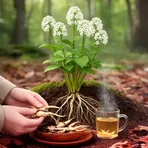
A plant from eastern North America with small white flowers and roots used in medicine
Surface Forms
Morphology
Seneca + snakeroot
The phrase is partly compositional: 'snakeroot' transparently signals a plant root (snake + root) and 'Seneca' marks an association or provenance (the Seneca people or region), so a learner who knows the constituents will infer it's a plant linked to the Seneca or named for snakes. However, the specific botanical identity and medicinal uses are not predictable from the parts alone, so full meaning requires prior exposure.
Etymology
Seneca snakeroot gets its name from the Seneca people and the plant's root, which they used to treat snakebites, so early users called it Seneca + snakeroot. That's why today the name means a plant whose roots were used in 'traditional medicine'.

