
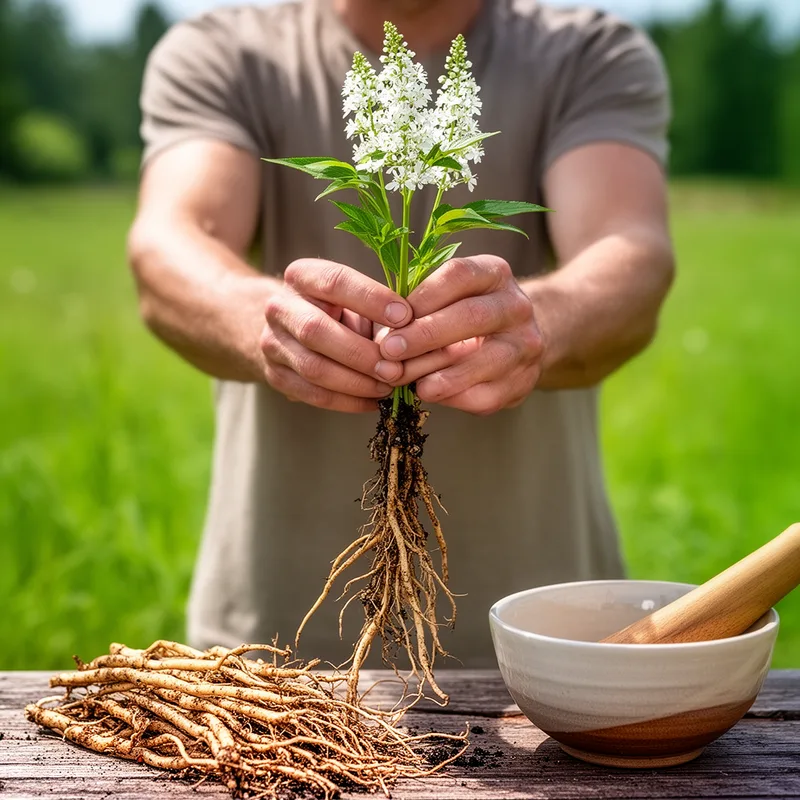
Seneka snakeroot
- noun
- Specialized
- The white flowers of Seneka snakeroot bloom in late spring.
Examples
-
Early settlers learned about Seneka snakeroot from Indigenous peoples.
-
The Seneka snakeroot is known for its medicinal properties.
-
The herbalist recommended using Seneka snakeroot to treat the symptoms.
-
Many herbalists recommend Seneka snakeroot for its health benefits.
-
The herbalist recommended using Seneka snakeroot to treat the symptoms of colds.
-
Early settlers learned about Seneka snakeroot from Indigenous peoples for its medicinal uses.
-
The white flowers of Seneka snakeroot bloom in clusters and attract many pollinators.
Synonyms

A North American plant with small white flowers and roots people use as medicine

A plant from eastern North America with small white flowers and roots used in medicine

A North American plant with small white flowers whose roots people use in cough medicines

A plant from eastern North America with small white flowers and roots used as medicine

A plant from eastern North America with small white flowers and a root used as medicine
A bushy plant that lives many years and has white flowers with green centers
Surface Forms
Morphology
Seneka + snakeroot
The element 'snakeroot' is compositionally transparent (snake + root) so a B1 learner would infer it is a plant/root associated with snakes or used medicinally, but the modifier 'Seneka' is a proper name/variant that does not transparently convey additional meaning about the species. Because the phrase yields a plausible general interpretation (a particular kind of snakeroot) but not the full botanical/medicinal specifics, it is only partially predictable from its parts.
Etymology
Seneka snakeroot may come from the Seneca people, who showed early settlers how to use the plant's root to treat snakebites. That's why the word snakeroot was used for a plant whose roots were a traditional 'medicine'.

