
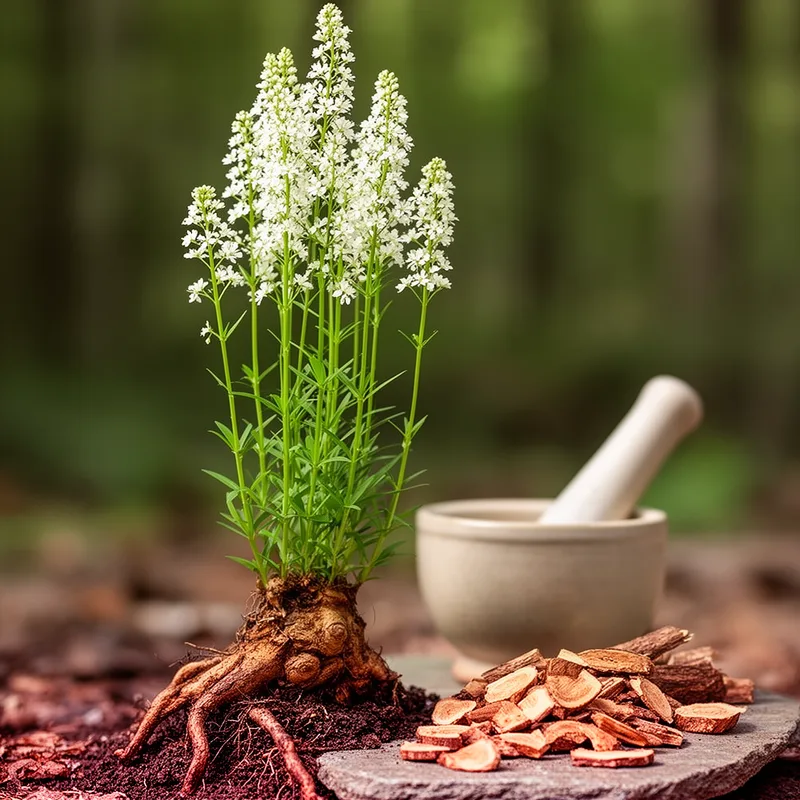
senega snakeroot
- noun
- Specialized
- You can identify senega snakeroot by its cluster of white flowers and tall, slender stems.
Examples
-
The dried root of senega snakeroot was once a popular ingredient in herbal remedies.
-
Early settlers used senega snakeroot to treat coughs and respiratory illnesses.
-
The senega snakeroot is known for its medicinal properties.
-
Many herbalists recommend senega snakeroot for respiratory issues.
-
Early settlers used senega snakeroot to treat coughs and respiratory illnesses.
-
The dried root of senega snakeroot was once a popular ingredient in herbal remedies.
-
Many herbalists recommend senega snakeroot for respiratory issues.
Synonyms

A North American plant with small white flowers and roots people use as medicine

A plant from eastern North America with small white flowers and roots used as medicine

A North American plant with small white flowers whose roots people use as medicine
A North American plant with small white flowers whose roots people use in cough medicines

A plant from eastern North America with small white flowers and roots used in medicine
A bushy plant that lives many years and has white flowers with green centers
Surface Forms
Morphology
senega + snakeroot
The phrase is a straightforward noun–noun compound: 'senega' (a Polygala root used medicinally) modifying 'snakeroot' (a type/name for a plant/root). A learner who knows both constituent meanings can directly infer it denotes the snakeroot associated with the senega plant (i.e., a medicinal plant/root), so the meaning is compositionally predictable.
Etymology
Senega snakeroot may come from the word senega, which comes from the name 'Seneca' for the people who used the plant, and from snakeroot, a name for roots thought to cure 'snakebite' or that look like small snakes. So the name points to a plant whose root was used as a medicine.

