
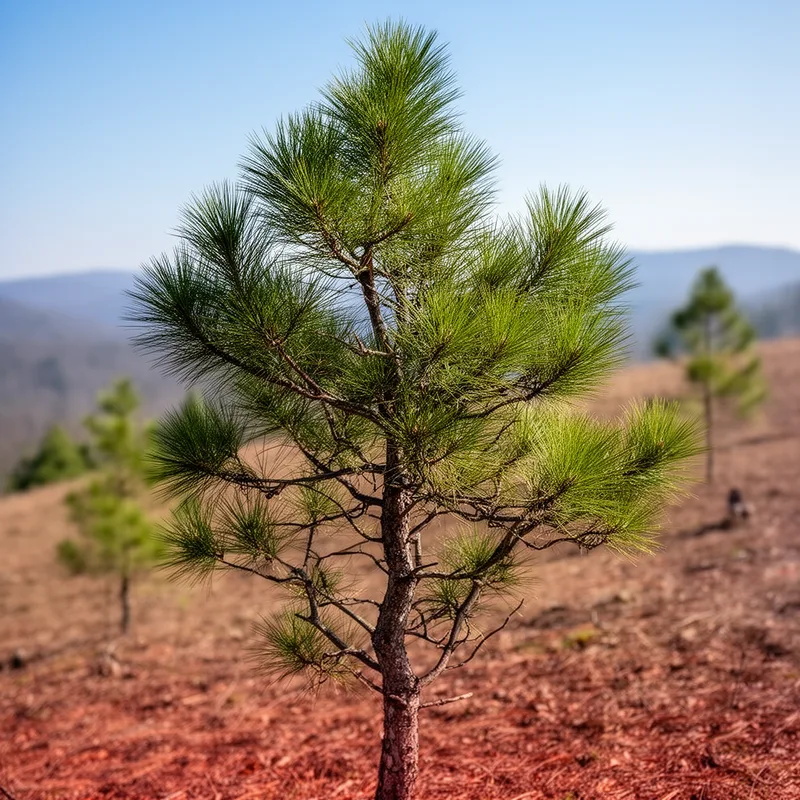
Pinus virginiana
- noun
- /ˈpaɪnəs vɜrˈdʒɪniənə/
- Specialized
- The Pinus virginiana is easily recognized by its twisted branches and paired needles.
Examples
-
Many reforestation projects in the Appalachian region use Pinus virginiana due to its rapid growth.
-
The Pinus virginiana is often found in sandy soils.
-
Local wildlife often use Pinus virginiana stands for shelter during winter months.
-
Many Pinus virginianas are planted for erosion control.
-
The Pinus virginiana tree provides excellent shelter for many bird species during harsh winters.
-
Gardeners love Pinus virginiana for its unique appearance and low-maintenance needs.
-
You can spot Pinus virginiana easily by its short, twisted branches and paired needles.
Synonyms
 1
6.0
1
6.0

A small shrubby pine tree with twisted branches and short needles in pairs
 1
8.2
1
8.2
A small, bushy pine tree with twisted branches and short needles in pairs that grows in the eastern United States

A small bushy pine tree from the eastern United States with twisted branches and short needles in pairs
Surface Forms
Morphology
The name combines 'Pinus' (the genus of pines) with the Latin epithet 'virginiana' (denoting origin from Virginia), so the meaning 'a pine from Virginia' or 'Virginia pine' is directly derivable from the parts. This follows the regular, compositional binomial naming pattern used in biology, so a B1 learner who knows the constituent meanings can understand the MWE.
Etymology
Pinus virginiana comes from Latin: Pinus means 'pine' and virginiana points to 'Virginia', where this small, shrubby pine is common. So the name simply means 'Virginia pine' and tells you the tree is a pine from that area.