

Jersey pine
- noun
- /ˈdʒɜrzi paɪn/
- US
- We identified several Jersey pines along the edge of the forest trail.
Examples
-
The Jersey pine thrives in sandy soils and open woodlands of New Jersey.
-
The Jersey pine is often used as a decorative plant in landscaping due to its unique shape.
-
Some gardeners plant Jersey pine as a windbreak because of its hardy nature.
-
Look at that beautiful Jersey pine over there!
-
The Jersey pine thrives in sandy soils.
-
Many birds nest in the branches of the Jersey pine during the spring season.
-
The Jersey pine grows well in the sunny, dry areas of New Jersey's coastal regions.
Synonyms
 1
6.0
1
6.0

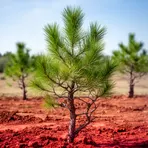
A small shrubby pine tree with twisted branches and short needles in pairs
 1
8.2
1
8.2
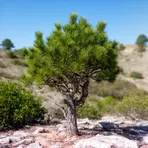
A small, bushy pine tree with twisted branches and short needles in pairs that grows in the eastern United States
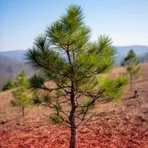
A small pine tree from the eastern United States that often has twisted branches and short needles in pairs
Surface Forms
Morphology
The phrase is compositionally built from a place-name + a noun: 'Jersey' (a place) + 'pine' (a type of tree) yields a pine associated with Jersey, so a B1 learner who knows both words can infer it denotes a kind of pine tree. This provenance/species naming pattern is common cross-linguistically and therefore transparent, though learners might need contextual cues to know which 'Jersey' is intended (island vs. New Jersey).
Etymology
Jersey pine is named after the U.S. state Jersey and the tree type pine, because this small, twisted tree grows a lot on New Jersey's sandy soil. So the name gives a clear picture: a low, hardy pine from Jersey, which helps you remember the tree.