

Pinus resinosa
- noun
- Specialized
 :
pino resinosa
:
pino resinosa
- The Pinus resinosa is a common sight in forests throughout the northeastern United States.
Examples
-
The Pinus resinosa thrives in well-drained sandy soils.
-
Many wooden structures in the region are built from the strong timber of Pinus resinosa.
-
Foresters are working to protect stands of Pinus resinosa from invasive pests.
-
I saw a beautiful Pinus resinosa during my hike.
-
Foresters are working to protect stands of Pinus resinosa from invasive pests.
-
Many wooden structures in the region are built from the strong timber of Pinus resinosa.
-
The Pinus resinosa is a common sight in forests throughout the northeastern United States.
Synonyms

A tall pine tree with long needles in pairs and reddish bark used for timber
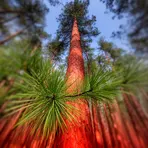
A tall eastern North American tree with long needles in pairs and red bark
Surface Forms
Morphology
Pinus + resinosa
This is a taxonomic Latin binomial composed of the genus name Pinus (pine) and the species epithet resinosa, which can be read as ‘resinous pine’ if the learner recognizes the element resin-/resinous. Although 'resinosa' is not glossed in the input, its meaning is morphologically predictable from resin + Latin adjectival ending and biological naming conventions are cross-linguistically common, so a learner who knows both constituents can infer it denotes a species of pine.
Etymology
Pinus resinosa comes from old Latin words: Pinus means 'pine' and resinosa means 'full of resin'. Imagine sticky sap on the tree's reddish bark — that resin and red colour is why people call it 'red pine', so the name points to this species of pine.

