

Pinus palustris
- noun
- /ˈpaɪnəs pəˈlʌstrɪs/
- Specialized
- Many conservation efforts focus on restoring the habitat of Pinus palustris.
Examples
-
The lumber from Pinus palustris is highly valued for its strength and durability.
-
The ecosystem of the southeastern United States once consisted largely of Pinus palustris forests.
-
The Pinus palustris is commonly found in the wetlands of Florida.
-
Many builders prefer Pinus palustris for its strong timber.
-
The lumber from Pinus palustris is highly valued for its strength and durability.
-
Many builders prefer Pinus palustris for its strong timber.
-
The ecosystem of the southeastern United States once consisted largely of Pinus palustris forests.
Synonyms
 1
6.6
1
6.6

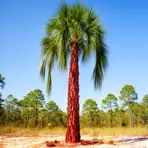
A tall pine tree from the southeastern United States with very long needles and rough red-brown bark
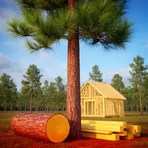
A large pine tree from the southeastern United States with long needles and rough reddish bark used for timber

A large tree with long needles and twisted branches from the southeastern United States used for timber
Surface Forms
Morphology
Pinus + palustris
The form is a Latin binomial: 'Pinus' denotes the pine genus and the epithet 'palustris' (Latin for 'of the marsh') is descriptively compositional, so the overall meaning (a marsh-associated pine) is partly derivable from its parts. However, species epithets are technical Latin terms not known to an average B1 learner and scientific names are specialized rather than everyday language, so the meaning is not fully predictable without subject-specific or Latin knowledge.
Etymology
Pinus palustris comes from Latin words: Pinus means 'pine' and palustris means 'of the marsh'. So the name paints the picture of a pine tree linked with marshy or wet places.