
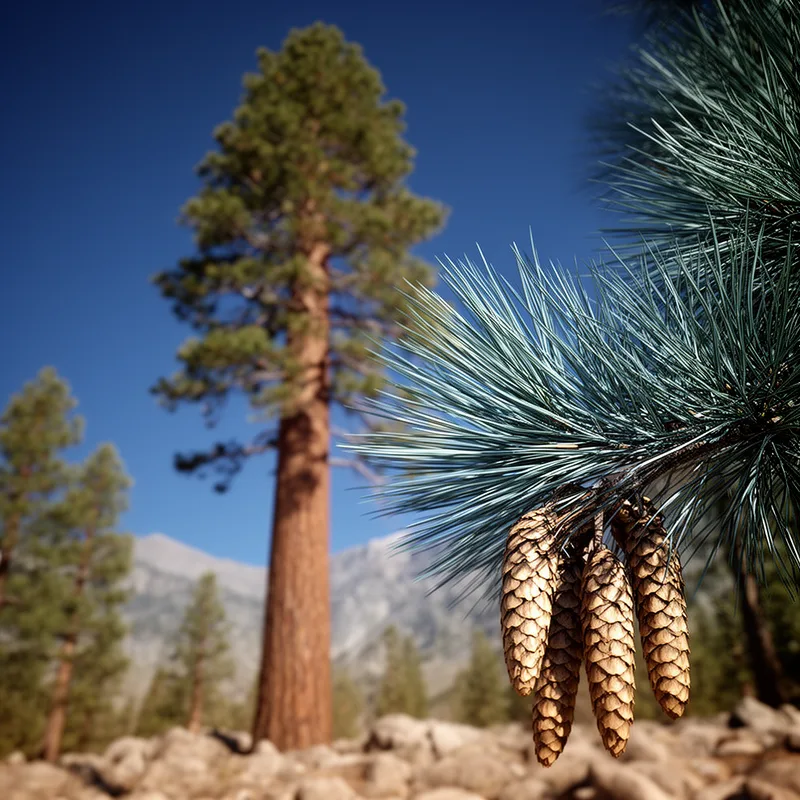
Pinus jeffreyi
- noun
- /ˈpaɪnəs ˈdʒɛfəri/
- Specialized
- The distinctive needles of Pinus jeffreyi help differentiate it from other pines.
Examples
-
The forest was dominated by Pinus jeffreyi, stretching tall against the blue sky.
-
Botanists surveyed several stands of Pinus jeffreyi in the Sierra Nevada region.
-
The Pinus jeffreyi is known for its impressive height.
-
Have you seen a Pinus jeffreyi in the wild?
-
The distinctive needles of Pinus jeffreyi help differentiate it from other pines.
-
The forest was dominated by Pinus jeffreyi, stretching tall against the blue sky.
-
Have you seen a Pinus jeffreyi in the wild?
Synonyms

A tall pine tree from western North America with long blue-green needles in groups of three and long cones

A tall pine tree from western North America with long blue-green needles in groups of three and large cones
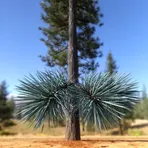
A tall western North American pine with long blue-green needles in groups of three
Surface Forms
Morphology
Pinus + jeffreyi
This is a Linnaean binomial: 'Pinus' identifies the genus (pines) and 'jeffreyi' is a specific epithet (an eponym). A B1 learner who knows 'Pinus' can infer it denotes a species of pine; taxonomic naming is consistent across languages so the overall referent is transparently a type of pine even if the epithet has no independent dictionary meaning.
Etymology
Pinus jeffreyi is a Latin plant name: Pinus means 'pine' and jeffreyi is named after the Scottish plant collector John Jeffrey, who collected plants in western North America in the 1800s. So the name tells you it's a kind of pine and remembers the person who first found it.

