
Phytolacca
- noun
- /ˌfaɪtəˈlækə/
- Specialized
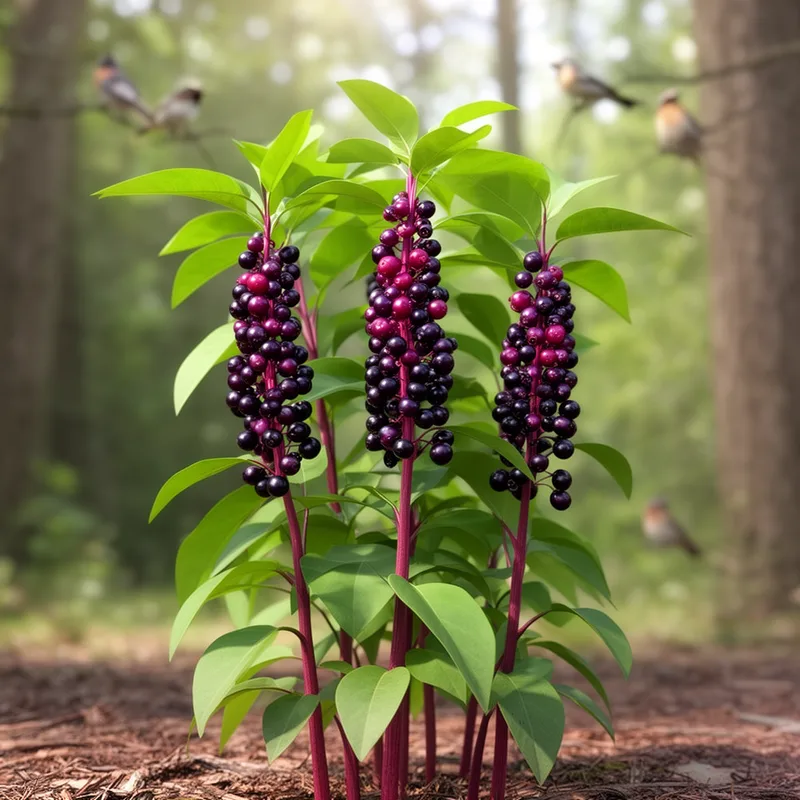
- The berries of Phytolacca are often toxic to humans but eaten by birds.
Examples
-
Several species in the genus Phytolacca are known for producing deep purple berries.
-
The Phytolacca plant is often found in temperate regions.
-
Researchers are studying Phytolacca for its potential medicinal properties.
-
Many gardeners appreciate Phytolacca for its unique appearance.
-
Researchers are studying Phytolacca for its potential medicinal properties.
-
Several species in the genus Phytolacca are known for producing deep purple berries.
-
The berries of Phytolacca are often toxic to humans but eaten by birds.
Synonyms


 1
9.9
1
9.9
A tall wild plant with dark purple berries that are poisonous if eaten
A group of flowering plants that includes pokeweeds
Compounds
- Specialized
A plant with thick roots and clusters of dark berries from eastern Asia

- Specialized
A tall North American plant with white flowers whose young shoots people cook but whose berries and roots are poisonous

- Specialized
A fast-growing evergreen tree from South America with a wide trunk that holds water and dark green oval leaves
Surface Forms
Etymology
Phytolacca comes from Greek parts phyto- 'plant' and lacca, a word related to 'lac' and the English lacquer that points to a 'dark dye' or 'resin'. So think of Phytolacca as a 'plant that makes a dark dye', which fits pokeweed's deep purple berries.