
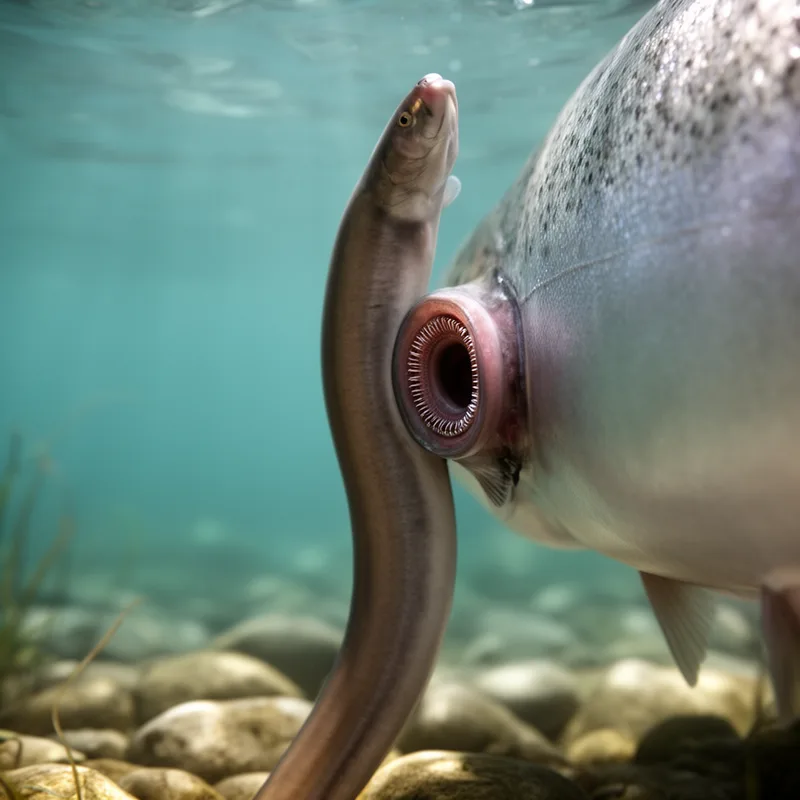
Petromyzon
- noun
- /ˌpɛtrəˈmaɪzən/
- Specialized
- The Petromyzon is known for its circular, sucker-like mouth used to attach to other fish.
Examples
-
Larval stages of Petromyzon can spend several years buried in riverbeds before maturing.
-
The Petromyzon is often found in freshwater rivers.
-
Biologists have studied Petromyzon to understand the evolution of vertebrates.
-
Many Petromyzons inhabit the coastal waters of North America.
-
Biologists have studied Petromyzon to understand the evolution of jawless fish in aquatic environments.
-
Larval stages of Petromyzon can spend several years buried in riverbeds before they grow into adults.
-
The Petromyzon is characterized by its distinctive sucker-like mouth, which it uses to cling to other fish in the water.
Synonyms
 9
9.0
9
9.0

A thin eel-like fish with no jaws that attaches to other fish to feed
A long fish without jaws with a round mouth that sucks blood from fish in rivers or seas
Compounds

- Specialized
A large eel-like fish that moves from sea into rivers to attach to and feed on other fish, sometimes eaten
Surface Forms
Etymology
Petromyzon comes from Greek parts petro- 'rock' and -myzon 'to suck', so it can be thought of as a 'rock-sucker'. This is a helpful image because lampreys have a round, sucker-like mouth and often cling to rocks or other fish, which explains the name.