
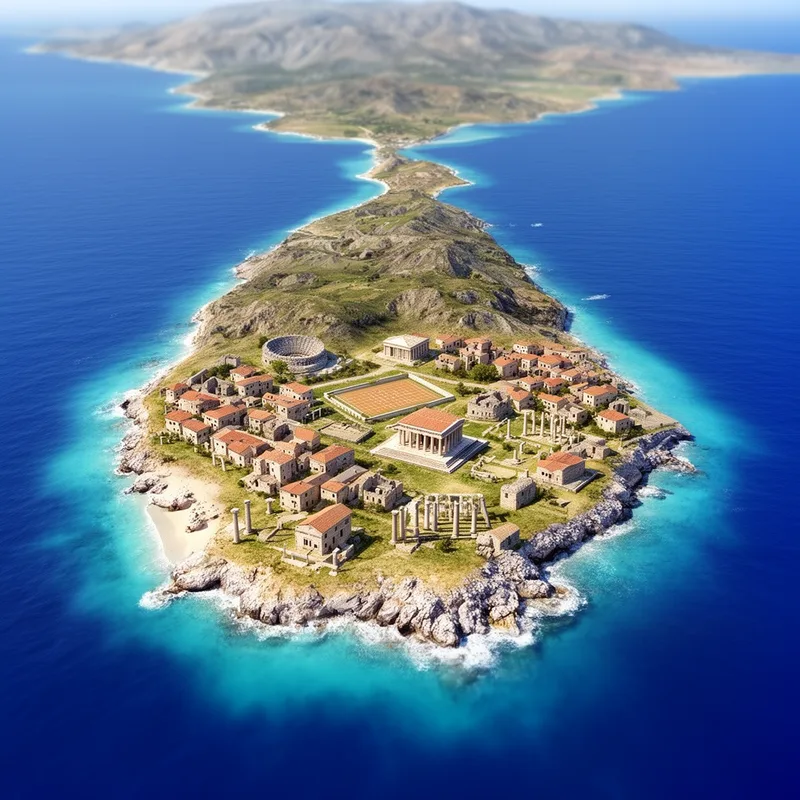
Peloponnesian Peninsula
- proper noun
- The ancient city-state of Sparta was located on the Peloponnesian Peninsula.
Examples
-
Tourists often visit archaeological sites across the Peloponnesian Peninsula to learn about ancient Greece.
-
Many important battles of Greek history took place on the Peloponnesian Peninsula.
-
The Peloponnesian Peninsula is rich in ancient history.
-
Have you ever visited the Peloponnesian Peninsula?
-
Many important battles of Greek history took place on the Peloponnesian Peninsula.
-
The ancient city-state of Sparta was located on the Peloponnesian Peninsula.
-
Tourists often visit archaeological sites across the Peloponnesian Peninsula to learn about ancient Greece.
Synonyms


 1
8.7
1
8.7
A large area of land in southern Greece that goes into the sea and has ancient Sparta and old cities
 1
8.8
1
8.8
A large peninsula in southern Greece with ancient sites like Sparta
Surface Forms
Morphology
This is a straightforward compositional place-name: 'Peloponnesian' specifies relation to the Peloponnese and 'peninsula' denotes a landmass surrounded by water, so the combined phrase denotes the peninsula belonging to/on the Peloponnese. Such adjective+noun place constructions are cross-linguistically regular and directly derivable from the constituents, meaning a B1 learner who knows both parts would understand the meaning.
Etymology
Peloponnesian Peninsula may come from an old Greek story about the hero Pelops and a word that meant 'island'. Even though this land is connected to the mainland, the name keeps the picture of 'island of Pelops' and today it means the large southern part of Greece where Sparta and other ancient cities are found.