

Peloponnese


 1
8.7
1
8.7
- proper noun
- /ˌpɛləpəˈniːz/
- Tourists flock to the Peloponnese to explore its stunning landscapes and classical ruins.
Examples
-
The third wave surged over the Peloponnese during the end of August; one, at Ilia, broke the new size record by reaching 99,000 acres, while another burned off the forest around Olympia.
Academic text (2008) -
Travelers often visit the Peloponnese for its beautiful beaches and historical sites.
-
Yeah, yeah, and, uh, we're in the southern Peloponnese.
-
You mention the southern Peloponnese.
-
On our final weekend, we were driven out into the Peloponnese to the ancient amphitheater at Epidaurus to see a performance of Lysistrata.
Fiction book (1996) -
When I asked that question in Athens, I was told that an easy two-hour drive on a modern superhighway would get me there, to the mountainous core of the Peloponnese.
Academic text (1998) -
The second struck at the end of July with widespread points of ignition that overwhelmed the fire services and contributed to the largest single fire in Greek history, a 74,100-acre burn near Aigialia in the northern Peloponnese.
Academic text (2008) -
Today's Arcadia is a political unit (a nome), trimmed back from its ancient realm to strike a balance with other representative districts in the Peloponnese.
Academic text (1998) -
Plataea (Greece, 479 B.C.): Allied Greek forces thwart the Achaemenid Persian invasion of the Peloponnese.
Academic text (1999) -
The ancient city of Sparta is located in the Peloponnese, a region rich in history.
Synonyms
 1
8.8
1
8.8
A large peninsula in southern Greece with ancient sites like Sparta
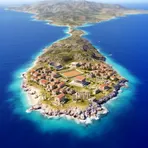
A large piece of land in southern Greece that has sea on three sides and ancient cities like Sparta
Surface Forms
Etymology
Peloponnese comes from old Greek parts: the name Pelops, a hero from legend, and -nesos meaning 'island'. So it once meant 'Pelops' island', and that name stayed even though the land is now a peninsula in southern Greece famous for ancient cities like Sparta.