

Peloponnesus


 1
8.8
1
8.8
- proper noun
- /ˌpɛləˈpɒnɪsəs/
- Let's stay in the Peloponnesus and stay out of Interstate rivalries and competitions and just go back to our old ways.
Examples
-
Tourists flock to the Peloponnesus to explore its rich history and stunning landscapes.
-
Now that derives from one site in the northeastern Peloponnesus called Mycenae.
-
Undisturbed by subsequent building or excavations, it is one of the most important prehistoric sites in the Peloponnesus.
Academic text (2004) -
The team found gold and silver clothing ornaments, as well as a distinctive two-handled "depas" cup, the very first of its kind found on the Peloponnesus.
Academic text (2004) -
Experience the Greek springtime, from the monasteries of Meteora, whitewashed churches of Mykonos to the classical sites of Athens and the Peloponnesus.
Academic text (1994) -
A fusion of stone, sunlight, and sparkling sea, the Cyclades lie to the east of the Peloponnesus and southeast of the coast of Attica; they stretch as far as Samos and Ikaria to the east and are bounded to the south by the Cretan Sea.
Academic text (2006) -
The ancient ruins of Sparta are located in the heart of the Peloponnesus peninsula.
-
Many historians regard the Peloponnesus as a crucial area for understanding ancient Greek culture.
Synonyms
 1
8.7
1
8.7
A large area of land in southern Greece that goes into the sea and has ancient Sparta and old cities
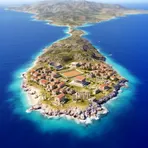
A large piece of land in southern Greece that has sea on three sides and ancient cities like Sparta
Surface Forms
Etymology
Peloponnesus comes from the Greek name Pelops and the word nesos meaning 'island', so it originally meant 'the island of Pelops'. That's why the name refers to the southern Greek land where ancient Sparta stood, even though today it is a large peninsula.