
Paleocene


 1
9.9
1
9.9
- noun
- /ˈpeɪliəˌsiːn/
- Specialized
- The striations, the dark and light lines which run diagonally across it, seem to put it in the Miocene, but the table's location, so near the sofa, indicates a much earlier date (Paleocene?).
Examples
-
The morphology of the bones matches that of Paleocene primates; however, paleontologists are still missing a full skeleton.
Blog text (29) -
Scientists study the Paleocene to understand how life rebounded after the mass extinction event.
-
Paleocene-Eocene Thermal Maximum for the reasons why they are better left well alone.
Blog text (20) -
At that point, we're headed into a late Paleocene climate superimposed on a bunch of continents configured to produce ice ages.
Blog text (28) -
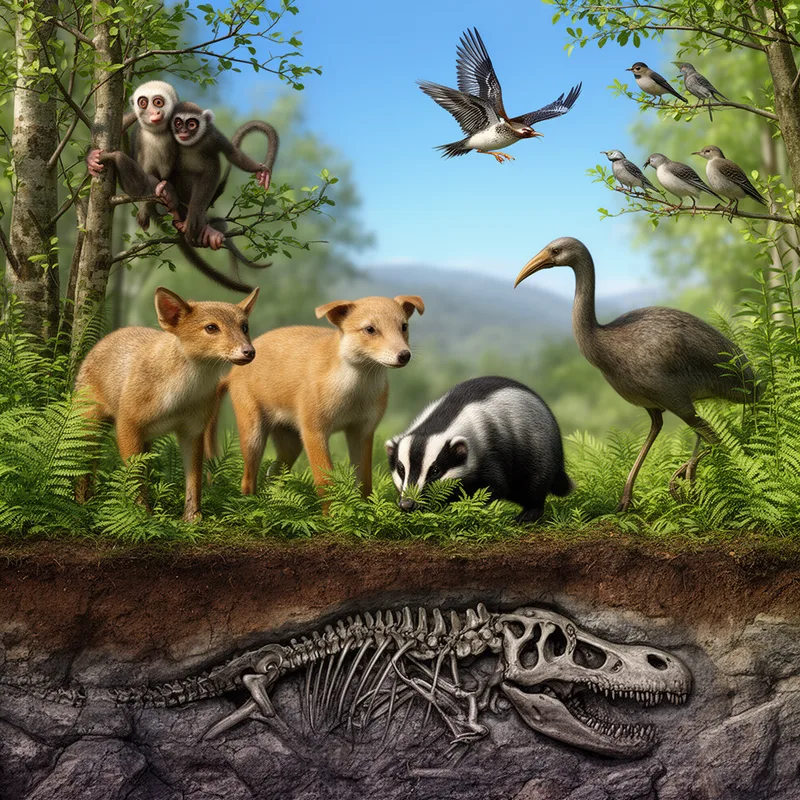
During the Paleocene epoch, mammals began to diversify significantly after the extinction of the dinosaurs.
-
Fossils from the Paleocene show that the climate was much warmer than it is today.
Synonyms

A time 66 to 56 million years ago after the dinosaurs died when early mammals and birds first appeared
Compounds
- Specialized
A time 66 to 56 million years ago after the dinosaurs died when early mammals and birds first appeared
How Old
- Specialized
1
9.9

- Specialized
- Specialized
- Specialized
1
9.9
- Specialized
1
9.9
- Specialized
1
9.9
- Specialized
1
9.1
Surface Forms
Morphology
Paleocene = paleo + cene
The parts are specialized combining forms used in geological epoch names and the epoch meaning is technical and not recoverable by an average B1 learner.
Etymology
The word Paleocene comes from Greek parts paleo- meaning 'old' and -cene meaning 'new', and you can see paleo- in paleontology. So Paleocene names the early 'new' time after the dinosaurs went extinct — the 'old' beginning of a new age when mammals and birds first appeared and began to become many different kinds.