

Oxford movement
- noun
- UK
- The Oxford movement aimed to restore traditional practices.
Examples
-
Many clergymen associated with the Oxford movement published influential religious tracts.
-
Historians trace the origins of modern Anglo-Catholicism to the Oxford movement.
-
The Oxford movement influenced Anglican worship practices in the nineteenth century.
-
Many scholars study the Oxford movement in their research.
-
The Oxford movement played a crucial role in shaping modern Anglicanism by emphasizing traditional Catholic practices.
-
Many of the reforms advocated by the Oxford movement focused on restoring rituals that had been abandoned in the Church of England.
-
Scholars often debate the impact of the Oxford movement on the relationship between the Church and the state in 19th-century England.
Synonyms

Religious ideas from the Oxford Movement that revive older Church of England rituals
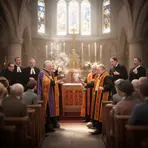
A 19th-century group in the Church of England that wanted to bring back Catholic rituals
Surface Forms
Morphology
The phrase is compositionally built from 'Oxford' (a place/university) + 'movement' (a collective effort), so a B1 learner who knows both words can infer it denotes a movement associated with Oxford. However, the specific historical, religious aims and 19th-century context are specialized and not derivable from the constituents alone, so full meaning requires prior exposure or background knowledge.
Etymology
Oxford movement comes from a small group of priests and students at Oxford University in the 1800s who wrote short papers called 'tracts' to bring back older, more Catholic-style church practices. Because they met at Oxford and formed a 'movement' to 'bring back' these traditions, the phrase now refers to that 19th-century effort to restore Catholic ways and resist modern changes.

