

Tractarianism
- noun
- /trækˈtɛəriənˌɪzəm/
- Formal
- The principles of Tractarianism were articulated in the 'Tracts for the Times' during the 19th century.
Examples
-
His conclusion is that while these elements of Tractarianism do respond to the same discontentments that led to Victorian feminism, they were not themselves feminist, but best seen as "an alternative to feminism" (209).
Academic text (2007) -
Tractarianism emphasizes a return to traditional beliefs in contrast to modern interpretations of faith.
-
Tractarianism has been studied by many scholars to understand its influence on Anglican theology.
Synonyms

Religious beliefs and practices that Edward Pusey taught in the Oxford Movement
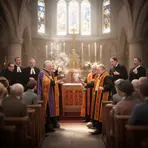
A 19th-century group in the Church of England that wanted to bring back Catholic rituals
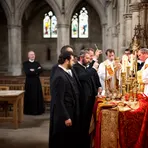
A 19th-century group in the Church of England that wanted to bring back Catholic traditions and oppose some modern changes
Surface Forms
Morphology
Tractarianism = Tractarian (opaque) = tract + arian + ism
Although formed by adding the productive suffix '-ism' to 'Tractarian', the resulting term denotes a specific 19th-century religious movement whose meaning is historical and specialized rather than predictable from its parts.
Etymology
Tractarianism comes from the small religious pamphlets called tracts 'short writings' produced by a group at Oxford in the 1800s. The endings -arian 'people who follow' and -ism 'a movement' show that Tractarianism is the set of religious beliefs and practices based on those tracts.

