
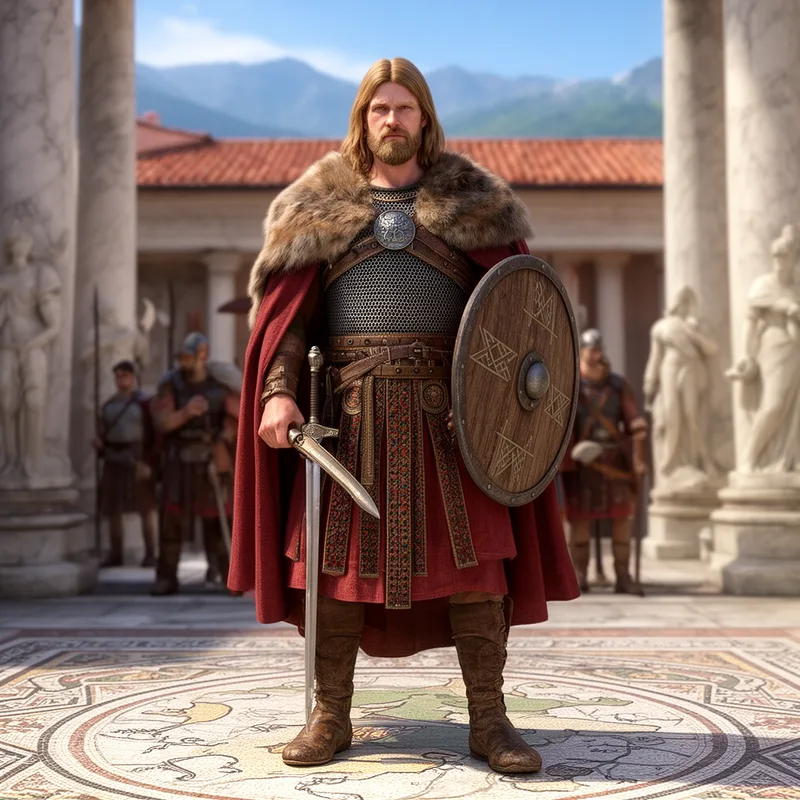
Ostrogoth
 1
9.9

- noun
- /ˈɑstrəˌɡɔθ/
- At the bottom of the chart is an ancestral, radially symmetrical helmet, like the sixth-century Ostrogoth helmet below.
Loading YouTube…
Watch on YouTubeFor Justinian, chaos at the Ostrogoth court presents an opportunity.
- For Justinian, chaos at the Ostrogoth court presents an opportunity.
- In the West, the Ostrogoths had an impressive ruler named Theodoric.
Examples
-
The Ostrogoths established a powerful kingdom in northern Italy during the early 500s AD.
-
For Justinian, chaos at the Ostrogoth court presents an opportunity.
-
For Justinian, chaos at the Ostrogoth court presents an opportunity.
-
In the West, the Ostrogoths had an impressive ruler named Theodoric.
-
There's a variant on this formula in the great mosaics of the life of Christ, made in Ravenna under Theodoric the Ostrogoth, and very Roman in style.
-
Meanwhile, the Huns subjugated the Geppers, Alemany, the Eastern Goths, Ostrogoths, and other minor Germanic, Slavic and Somatian tribes.
-
The Ostrogoth king Theodoric was known for his efforts to unify the Germanic tribes.
-
Many artifacts from the Ostrogoths have been discovered in archaeological sites throughout Italy.
Synonyms
 7
8.9
A person from a northern European people who invaded the Roman Empire in the 3rd to 5th centuries
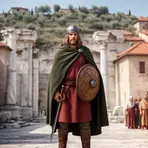
A member of an ancient East Germanic people who lived in Italy
Surface Forms
Etymology
Ostrogoth comes from two parts: Ostro- meaning 'east' and Goth meaning the tribe 'Goth'. Think of them as the 'eastern Goths' who came from the east and made a kingdom in Italy, which is why Ostrogoth means a member of the eastern branch of the Goths.