
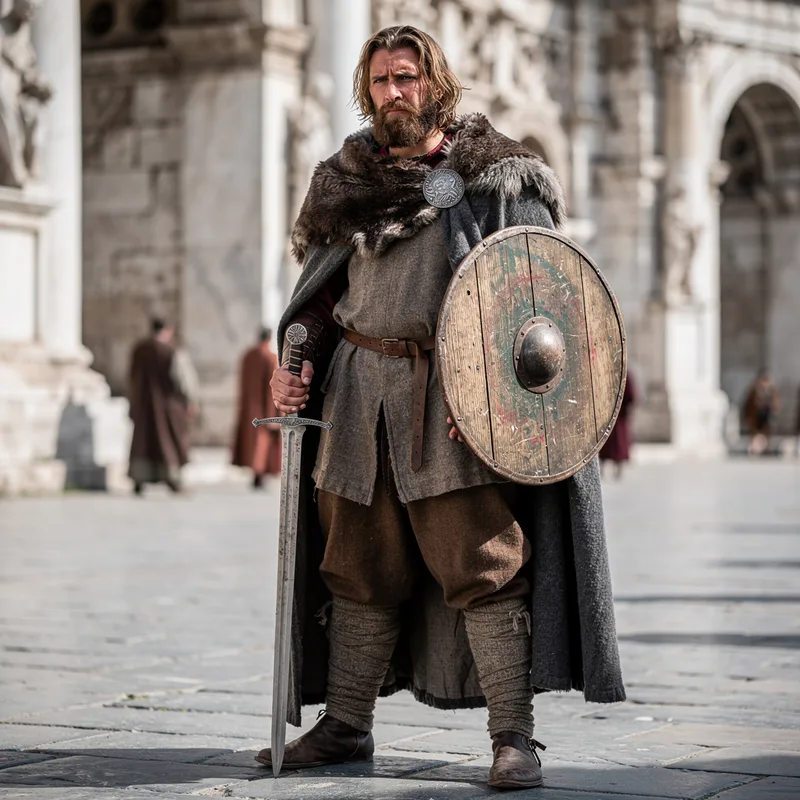
Goth
 8
8.9
8
8.9

- noun
- /ɡɔθ/
- Many of these small garrisons were besieged by the Goths and their allies, the Burgundians and the Franks.
Loading YouTube…
Watch on YouTubeNot just symbolic, I mean damaging and, and, and shocking, but most of all symbolic sacking of Rome by Alaric and the Goths.
- Not just symbolic, I mean damaging and, and, and shocking, but most of all symbolic sacking of Rome by Alaric and the Goths.
- The question was about the what the visa Goths as Federati got out of this deal or we're supposed to get.
- And remember, we said the Oscar Goths were pretty reasonable occupiers, would be destroyed by the Romans themselves.
Examples
-
The mission narratives of Theophilus the Indian and Ulfila the Goth represent the two most unequivocally positive representations of the cooperation between bishop and emperor in history.
Academic text (2018) -
In the 5th century, the Goths invaded Rome, significantly contributing to the empire's downfall.
-
The middle was what the Goths had before they even came over to to Europe.
-
The battle was going as planned, and the Goths were routing.
-
Among the most powerful were a Germanic people known as Goths, who were composed of two tribal groups, the Visigoths and Ostrogoths.
-
The Visigoths were one of the two main tribal groups known as Goths during the decline of the Roman Empire.
-
Historians often study the Goths to understand the dynamics of the migrations that led to the fall of ancient civilizations.
Surface Forms
Etymology
Goth comes from the name of an old Germanic group, the Goths, who moved into the Roman Empire and even sacked Rome. So Goth originally meant a 'member' of that people.