
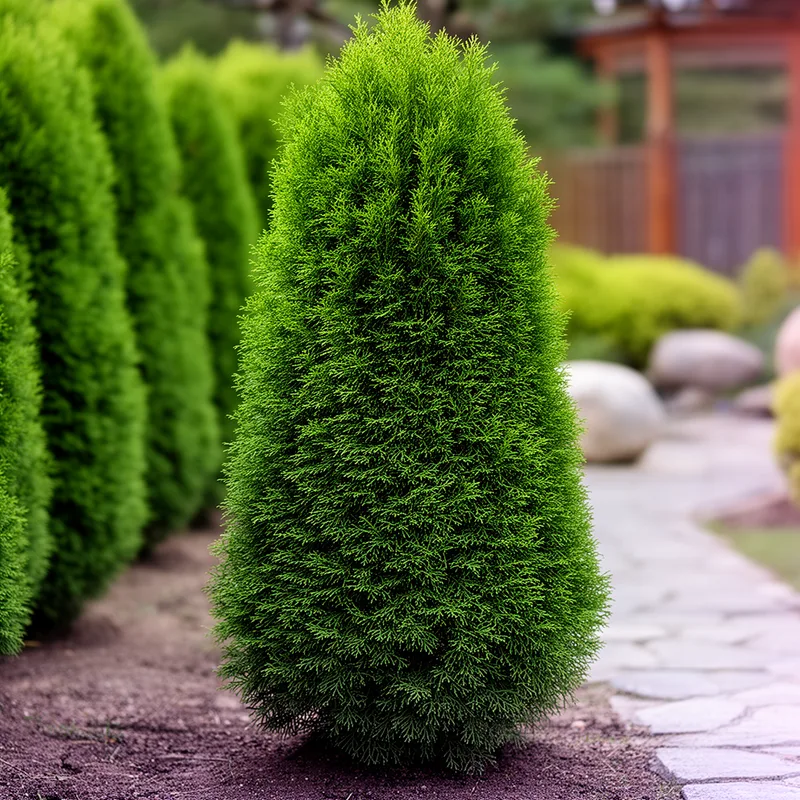
Oriental arborvitae
- noun
- /ˌɔːrɪˈɛntəl ˈɑːrbərˌvaɪti/
- We planted an Oriental arborvitae near the entrance to add year-round greenery to the garden.
Examples
-
The Oriental arborvitae is often used as a hedge due to its dense foliage and attractive appearance.
-
Many gardeners in Europe prefer the Oriental arborvitae for its hardiness and unique, upright form.
-
The Oriental arborvitae is a popular choice for landscaping.
-
Many gardeners prefer Oriental arborvitaes for their low maintenance.
-
Many gardeners in Europe prefer the Oriental arborvitae for its hardiness and unique, upright form.
-
The Oriental arborvitae is often used as a hedge due to its dense foliage and attractive appearance.
-
We planted an Oriental arborvitae near the entrance to add year-round greenery to the garden.
Synonyms


 1
9.9
1
9.9
An evergreen tree or bush with dense green leaves often used in gardens
A small evergreen tree or large bush from Asia grown in gardens and parks
An evergreen shrub or small tree from Asia that people often plant in gardens
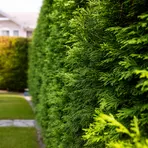
An evergreen tree or shrub with small flat leaves often grown as a hedge
Surface Forms
Morphology
This is a straightforward adjectival modification: 'oriental' (from the East/Asia) + 'arborvitae' (a type of tree) yields a tree/shrub of that origin. The meaning is compositionally predictable from the constituents and follows a common noun-phrase pattern, so a B1 learner who knows both words can infer the referent.
Etymology
Oriental arborvitae comes from old Latin words arbor and vitae, meaning 'tree of life', and Oriental shows it is 'from the East', meaning Asia. The picture of a small evergreen 'tree of life' explains why this name fits the tough Asian shrub often used in gardens and hedges.