
Oligocene epoch
- noun
- /ˈɒlɪɡoʊsiːn ˈɛpɒk/
- Specialized
- During the Oligocene epoch, global temperatures began to cool.
Examples
-
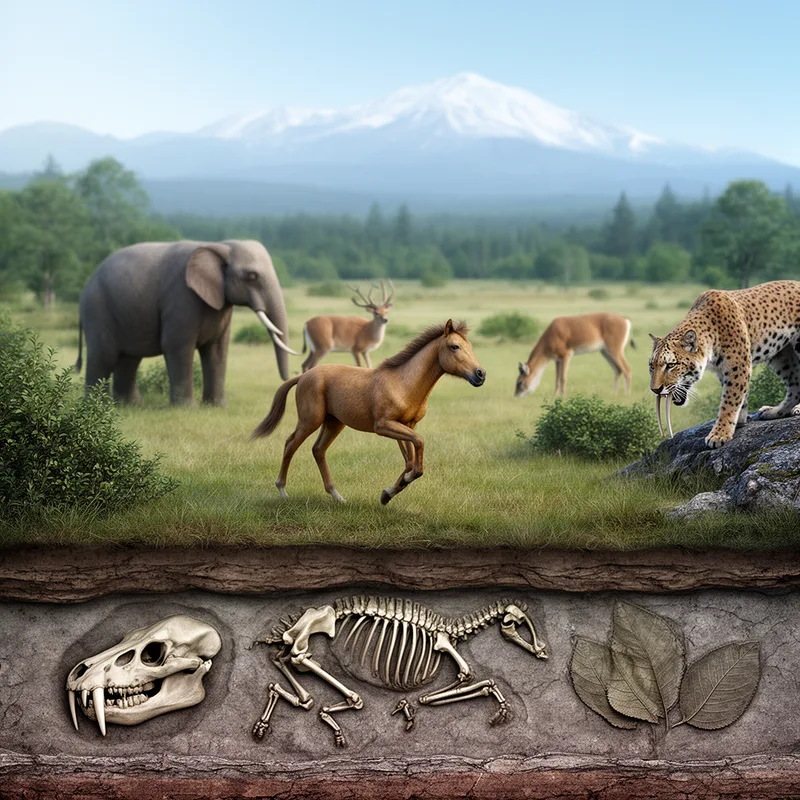
The Oligocene epoch saw the rise of modern mammals.
-
The fossils collected from this site date back to the Oligocene epoch, when modern mammal families began to appear.
-
During the Oligocene epoch, global temperatures cooled significantly, leading to major changes in vegetation.
-
The Oligocene epoch saw the early evolution of many modern mammal groups.
-
The fossil record from the Oligocene epoch provides key evidence for the appearance of sabertoothed cats.
-
During the Oligocene epoch, which lasted from about 34 to 23 million years ago, significant climatic changes altered the planet's environment.
-
Researchers study the Oligocene epoch to understand how global climate shifts affected the evolution of mammals.
Synonyms

A time about 34 to 23 million years ago when many modern mammals first appear and the climate cools
Surface Forms
Morphology
The phrase is fully compositional: it names the epoch called the Oligocene, so a learner who knows 'Oligocene' (the named geological period) and 'epoch' (a time subdivision) can derive that it refers to that specific geological time. Although technical, the noun+noun naming pattern for time periods is transparent and cross-linguistically common, making the meaning predictable from the parts.
Etymology
Oligocene epoch comes from two Greek parts: oligo- meaning 'few' and -cene meaning 'new'. That's why the name gives the picture of a time 34 to 23 million years ago when only a few modern animal groups, especially mammals, had appeared.

