

Old World rabbit
- noun
- UK
- Most pet rabbits are descended from the Old World rabbit rather than other rabbit species.
Examples
-
Unlike hares, young Old World rabbits are born blind and hairless.
-
The Old World rabbit is known for its burrowing habits.
-
The Old World rabbit has adapted to a wide range of climates since its introduction to Australia.
-
Many Old World rabbits inhabit the fields of southern Europe.
-
Many farmers raise Old World rabbits for meat and fur due to their adaptability.
-
The Old World rabbit is often seen in gardens where it forages for grass and vegetables.
-
In the wild, Old World rabbits create extensive burrow systems to escape predators.
Synonyms

A rabbit originally from Europe and North Africa that lives in burrows and is often kept as a pet
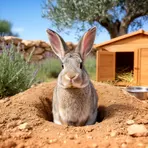
A common burrowing rabbit from southern Europe and northern Africa, often kept as a pet

A group of rabbits from Europe and nearby regions, including the European rabbit
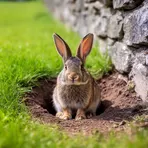
A rabbit or other small burrowing animal with long ears and a short tail
Surface Forms
Morphology
The head noun 'rabbit' is fully transparent, but 'Old World' is a conventional biogeographical label (Europe/Africa/Asia) that is not directly derivable from the literal meanings of 'old' + 'world' by a B1 learner. Thus the phrase partially composes (a rabbit from a named place) but requires prior lexical or cultural knowledge of the term 'Old World' for the specific geographic sense.
Etymology
Old World rabbit comes from calling this rabbit an animal of the Old World, meaning Europe and North Africa where it lived long before people moved rabbits to other places. So, Old World rabbit means a rabbit that is 'native to' Europe and North Africa.

