
Midsummer Day
- noun
- UK
- On Midsummer Day, the trains will be packed.
Examples
-
This knight has been summoned to present himself in the lists before your castle by dawn on Midsummer Day.
-
And far beyond, the blue outline of Ragged Island appeared and disappeared in the stubborn mist that refused to lift even on this beautiful midsummer day.
Fiction book (1999) -
On Midsummer Day, the trains will be packed.
-
And far beyond, the blue outline of Ragged Island appeared and disappeared in the stubborn mist that refused to lift even on this beautiful Midsummer Day.
Synonyms

 3
4.4
3
4.4

A traditional day on June 24 when people pay rent and other yearly payments


 1
3.7
1
3.7
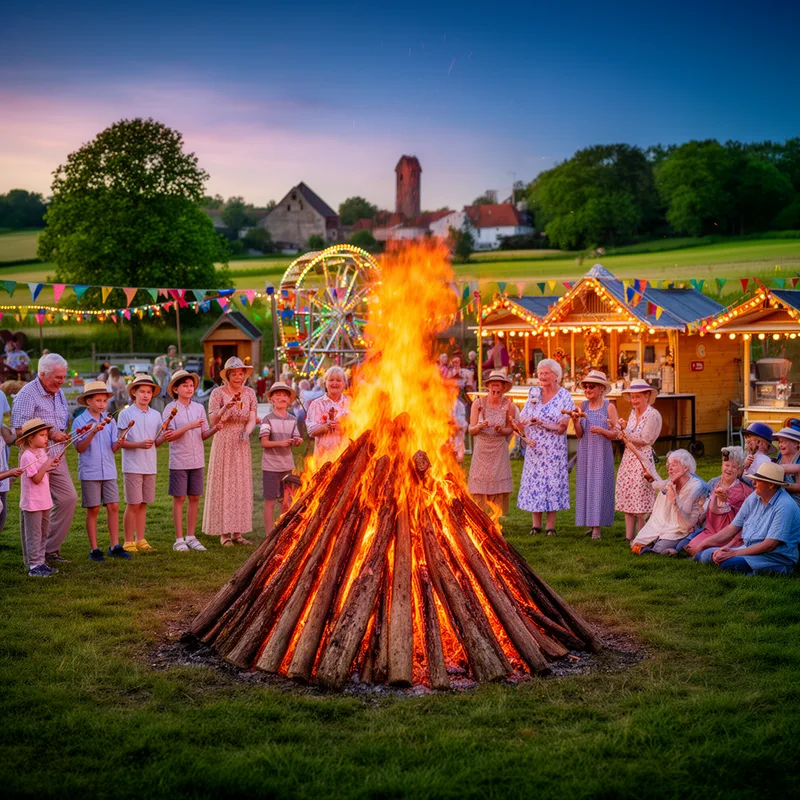
A day when people celebrate the middle of summer on 24 June

A festival on June 24 that celebrates the birth of St John the Baptist
Surface Forms
Morphology
The meaning is compositionally derivable: 'midsummer' (the middle/longest part of summer) combined with 'day' gives 'a day that falls at midsummer' — i.e. a calendar/observance day around late June. Specific cultural details (e.g. its status as a traditional quarter day in parts of the UK and Ireland) are extra knowledge, but the core meaning is transparently understandable from the constituents.
Etymology
Midsummer Day comes from the words mid and summer, meaning the 'middle of summer'. People long ago held fairs, lit big bonfires and even renewed contracts on that day, so today it means the special day around June 24 that marks the summer midpoint.