
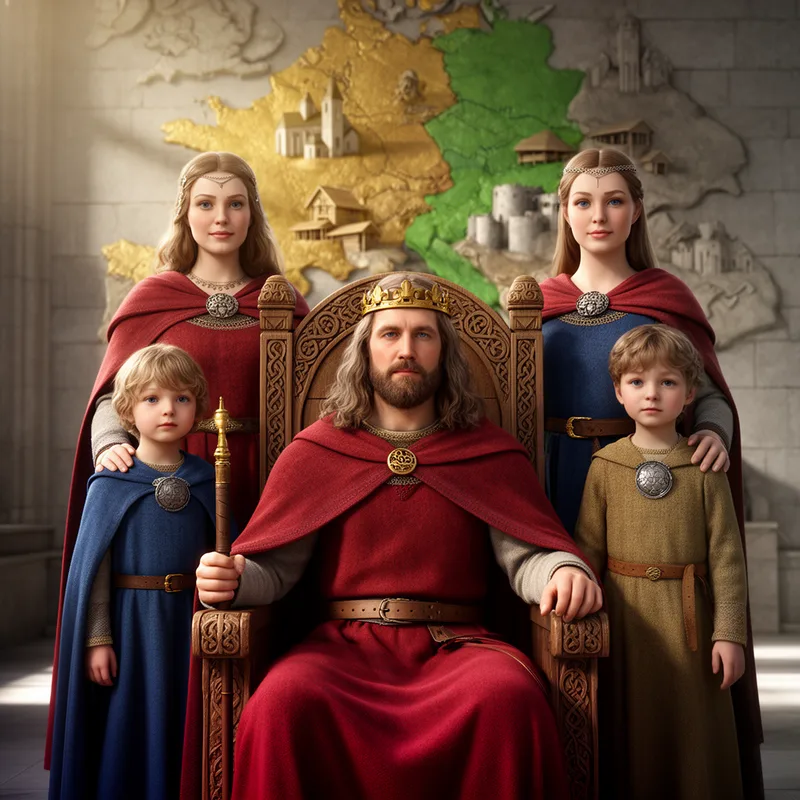
Merovingian dynasty
- noun
- /ˌmɛrəˈvɪndʒən ˈdaɪnəsti/
- The Merovingian dynasty began with Clovis I.
Examples
-
The Merovingian dynasty played a crucial role in shaping the early medieval history of France and Germany.
-
After the fall of the Merovingian dynasty, the Carolingians rose to power in the Frankish kingdom.
-
Many archaeological finds have been linked to the reign of the Merovingian dynasty.
-
Did the Merovingian dynasty influence modern France?
-
After the fall of the Merovingian dynasty, the Carolingians rose to power in the Frankish kingdom.
-
Many archaeological finds have been linked to the reign of the Merovingian dynasty.
-
The Merovingian dynasty played a crucial role in shaping the early medieval history of France and Germany.
Surface Forms
Morphology
The phrase is a direct adjective + noun composition: 'Merovingian' specifies which family/period and 'dynasty' means a succession of rulers, so a learner who knows both constituent meanings can infer it denotes the ruling family/period of the Merovingians. This proper-name + noun structure is compositional and common across languages, making the overall meaning immediately derivable.
Etymology
Merovingian dynasty is named after an early Frankish leader called Merovech, whose family became the ruling kings and were famous for their 'long hair' as a sign of power. So today Merovingian dynasty means the 'royal family' who ruled parts of what are now France and Germany around 500–750 AD.

