
Merovingian
 1
9.9
1
9.9

- adjective
- /ˌmɛrəˈvɪndʒən/
- Many historians study the Merovingian period to understand early medieval European politics.
- Merovingian bloodline
- Merovingian dynasty
- royal Merovingian
Loading YouTube…
Watch on YouTubeRemember, one of the symbols of Merovingian familial prestige was this long hair.
- Remember, one of the symbols of Merovingian familial prestige was this long hair.
- We'll see that the Merovingian kings wear long hair, especially long hair.
- No, Gregory is very, very involved with the Merovingian rulers, and he has to display courage.
Examples
-
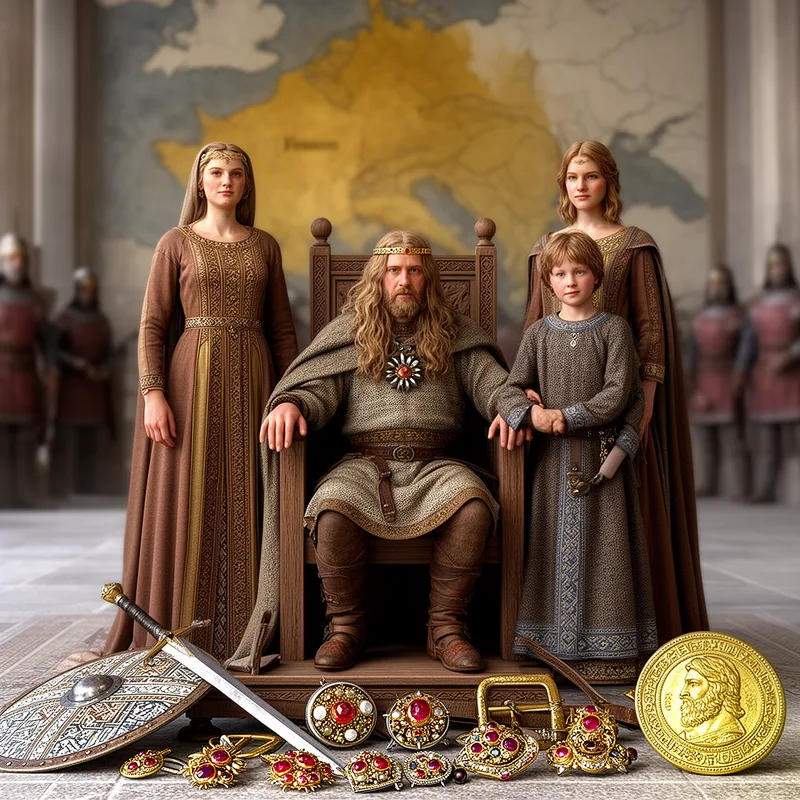
The Merovingian dynasty ruled much of Gaul from the 5th to 8th centuries.
-
THE MEROVINGIAN KINGS WERE KNOWN FOR HAVING LONG, RED HAIR.
-
We'll see that the Merovingian kings wear long hair, especially long hair.
-
It's from a line of the Merovingian kings.
-
Some even claimed that they moved to Southern France, where they started the fabled Merovingian Bloodline.
Blog text (2) -
Remember, one of the symbols of Merovingian familial prestige was this long hair.
-
Photo (color): A Merovingian coin from France that was in use from 570 to 670.
Academic text (2005) -
Merovingian historians have dealt with this for a long time; it deserves closer attention in other parts of Europe, this making of traditional European Christianity alongside other deep traditions.
Academic text (2002) -
Sulpicius Severus, in his life of St. Martin of Tours, offers Christians in the Merovingian kingdom not just the biography of an extraordinary hero, but also a theology of the episcopacy with all its ecclesiological ramifications.
Academic text (2002) -
The cultural influences of the Merovingian kings are still seen in modern French heritage.
Compounds

A royal family of the Franks who ruled parts of present-day France and Germany from about 500 to 750 AD
Surface Forms
Morphology
Merovingian = Meroving + ian
Formed from a historical dynastic name plus the adjectival suffix '-ian'; the formation relies on a proper name rather than productive English morphology, so the sense is not transparently derivable.
Etymology
Merovingian comes from the name Merovech, and like Victorian it means 'relating to' a ruler's name. So Merovingian describes people, art, or a time connected to that early ruling family in what is now France and Germany.