

Melilotus alba
- noun
- Specialized
- Beekeepers favor Melilotus alba because it produces a high yield of nectar for honey production.
Examples
-
Melilotus alba is often planted to improve soil and provide forage for livestock.
-
The tall, fragrant spikes of Melilotus alba attract pollinators to wild meadows.
-
The Melilotus alba plant thrives in sunny locations.
-
Farmers often plant Melilotus alba for its beneficial properties.
-
Melilotus alba is often planted to improve soil and provide forage for livestock.
-
Beekeepers favor Melilotus alba because it produces a high yield of nectar for honey production.
-
The tall, fragrant spikes of Melilotus alba attract pollinators to wild meadows.
Synonyms
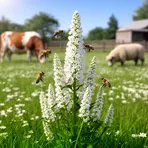
A plant with white, sweet-smelling flowers that farmers grow to feed animals and attract bees
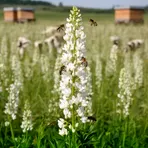
A tall plant with scented white flowers that bees visit for nectar and that is sometimes used for animal feed
Surface Forms
Morphology
Melilotus + alba
This is a taxonomic binomial combining the genus Melilotus (a forage/honey plant) with the epithet 'alba' (Latin for 'white'), so someone who knows both constituents can infer it denotes the white species of Melilotus (white sweet clover). However, 'alba' is a Latin/technical epithet and scientific names are specialized rather than ordinary English compounds, so the compositional relation is only partly transparent for typical B1 learners.
Etymology
Melilotus alba comes from old words meaning 'honey' and 'white'. The first part, Melilotus, points to the plant's sweet nectar that bees love, and alba means 'white', so the name paints a simple image of a sweet white flower used for honey and animal feed.

