
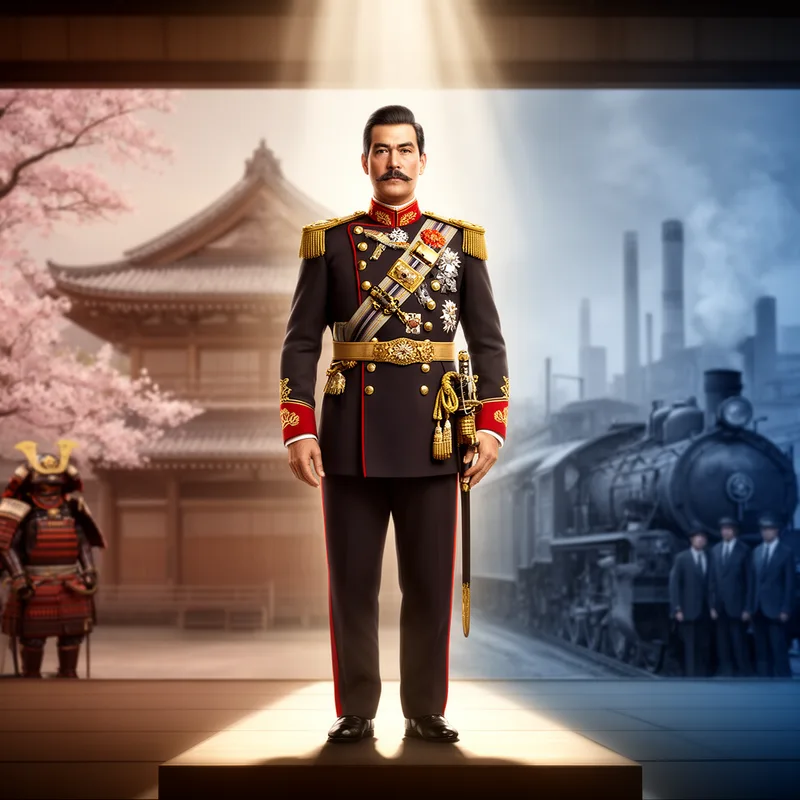
Meiji Tenno
- proper noun
- /ˈmeɪdʒi ˈtɛnnoʊ/
- During the reign of Meiji Tenno, Japan transformed into a modern nation.
Examples
-
The reign of Meiji Tenno marked a turning point in Japan's history.
-
The museum's exhibit showcases the accomplishments of Meiji Tenno and his era.
-
Many historians credit Meiji Tenno for successfully opening Japan to the West.
-
Did Meiji Tenno really oversee such significant changes in Japan?
-
Many historians credit Meiji Tenno for successfully opening Japan to the West.
-
The museum's exhibit showcases the accomplishments of Meiji Tenno and his era.
-
The reign of Meiji Tenno marked a turning point in Japan's history.
Synonyms
 1
8.7

The Japanese emperor who led Japan into modern times
 1
7.7
The emperor of Japan from 1867 to 1912 who led Japan's modernization and opened it to the world
The emperor of Japan from 1867 to 1912 who helped make Japan modern
Surface Forms
Morphology
This is a straightforward name + title combination: knowing 'Meiji' (the sovereign who reigned 1867–1912) and 'tenno' (Japan's emperor) allows a learner to infer it denotes the emperor named Meiji. Proper-name + title constructions are cross-linguistically common and therefore immediately comprehensible to learners who know both constituents.
Etymology
Meiji Tenno combines Meiji, the name of the period meaning 'enlightened rule', and Tenno, the Japanese word for 'emperor'. So Meiji Tenno simply means the emperor of the Meiji period, the ruler who led Japan's big changes and opening to the West from 1867 to 1912.