
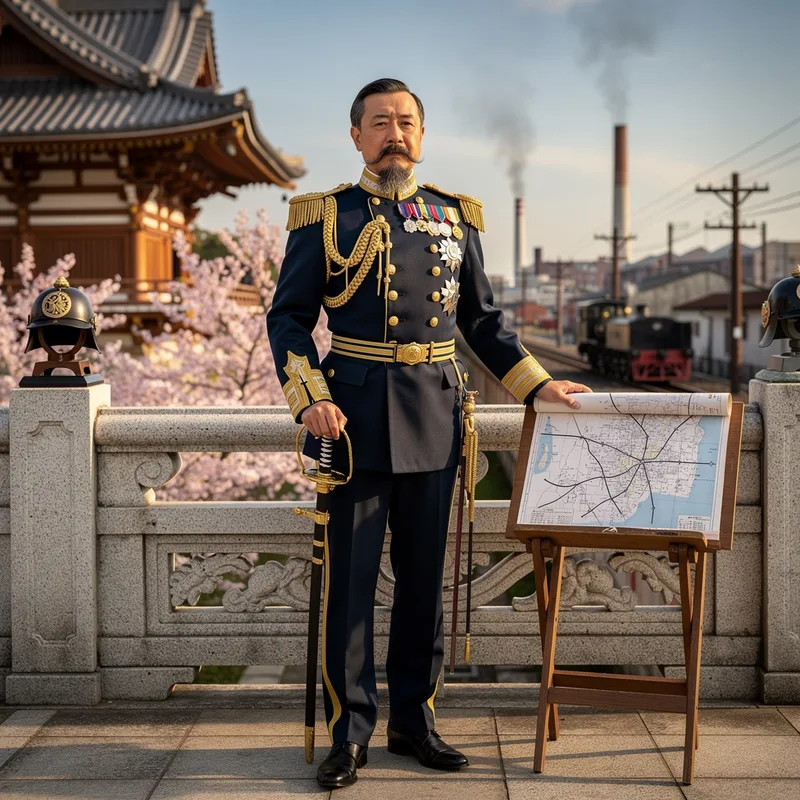
Meiji
 1
8.7

- proper noun
- /ˈmeɪdʒi/
- Second, the Meiji constitution assigned military power to the emperor.
- Emperor Meiji
Examples
-
Emperor Meiji led Japan through a period of significant modernization and reform from 1868 to 1912.
-
The policies implemented during the reign of Meiji transformed Japan into a major world power.
-
Japan after the Meiji Reform.
Academic text (2002) -
Fundamental changes in the imperial system took place with the Meiji Restoration of the imperial system.
Academic text (1991) -
The peak glory of the Meiji era was Japan's victory in 1905 in the Russo-Japanese War.
Academic text (1990) -
While you're in Harajuku, see Meiji Jingu Shrine in Yoyogi Park.
Blog text (25) -
The Meiji Period lasted from 1868 to 1912, coinciding with the reign of Emperor Meiji. See McClain, supra note 20, at 116, 280.
Academic text (2016) -
By 1868, a new constitutional monarchy headed by the young emperor Meiji replaced the feudal system, and Japan entered a period of "enlightened rule" now known as the Meiji Period (1868-1912).
Academic text (2016) -
The achievements of Meiji during the Restoration were pivotal in shaping contemporary Japan.
Synonyms
 1
7.7
The emperor of Japan from 1867 to 1912 who led Japan's modernization and opened it to the world
The emperor of Japan from 1867 to 1912 who helped make the country more modern and open to the West
The emperor of Japan from 1867 to 1912 who helped make Japan modern
Surface Forms
Etymology
Meiji is the name given to the Japanese emperor who ruled from 1867 to 1912 and the name comes from the characters 明 'bright' and 治 'rule', meaning 'enlightened rule'. That's why historians use Meiji for the emperor who helped lead Japan into the modern world.