

Mastigophora
- noun
- /ˌmæstɪˈɡɒfərə/
- Archaic
- Some Mastigophora use their flagella to move rapidly through water.
Examples
-
Modern taxonomy has reclassified many Mastigophora into different groups.
-
Researchers discovered several new species of Mastigophorae.
-
The study of Mastigophora helps scientists understand protozoan locomotion.
-
The Mastigophora are fascinating organisms to study.
-
The phyla Mastigophora move with a long whip-like extension called a flagellum.
-
Phylum Mastigophora: These protists move with a whip-like extension called a flagellum.
-
Many organisms in the Mastigophora group are known for their ability to propel themselves using flagella.
Synonyms

One-celled living things that move using one or more whip-like tails
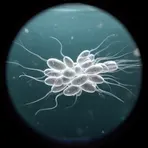
An old biology group of tiny animal-like cells that move with thin tails
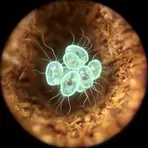
A group of tiny single-celled organisms with tail-like flagella that often live as parasites
Surface Forms
Morphology
Mastigophora = mastigo + phora
A technical compound built from Greek combining forms ('mastigo-' 'phora') that are not recognizable as independent English words to average learners, so the meaning cannot be derived transparently.
Etymology
Mastigophora comes from Greek parts mastigo- meaning 'whip' and -phora meaning 'bearing' or 'carrying', so it literally means 'whip-bearer'. So, these single-celled organisms carry one or more whip-like tails called flagella to move, which is why the name describes how they swim.

