

Mao Tsetung
- proper noun
- Mao Tsetung played a central role in shaping modern Chinese history.
Examples
-
Mao Tsetung was the founding father of the People's Republic of China, establishing the communist government in 1949.
-
The leadership style of Mao Tsetung has been the subject of much debate among historians.
-
Many Chinese cities have statues commemorating Mao Tsetung and his legacy.
-
Did Mao Tsetung really believe in the Cultural Revolution?
-
What were the main ideas of Mao Tsetung?
-
Many schools in China teach about Mao Tsetung and his influence on the country's development.
-
The policies implemented by Mao Tsetung have left a lasting impact on Chinese society and politics.
Synonyms
 98
5.3
98
5.3

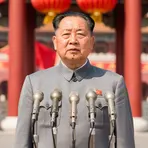
The Chinese communist leader who founded and led the People's Republic of China from 1949 to 1976
 1
3.8
1
3.8
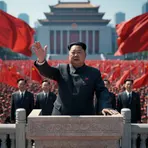
A Chinese communist leader who helped found the People's Republic of China
Surface Forms
Morphology
Mao + Tsetung
This is a proper name referring to a specific historical person; the meaning (identity and biographical information) is not compositionally derived from the constituent words. 'Tsetung' carries no independent lexical meaning and knowing the parts does not allow a B1 learner to infer the referent beyond that it names a person, so the expression is opaque.
Etymology
Mao Tsetung is an older English spelling for the Chinese leader now usually written Mao Zedong. 'Mao' is his 'family name' and 'Tsetung' is an old English way to spell 'Zedong', so when you see Mao Tsetung it means that same famous leader.