
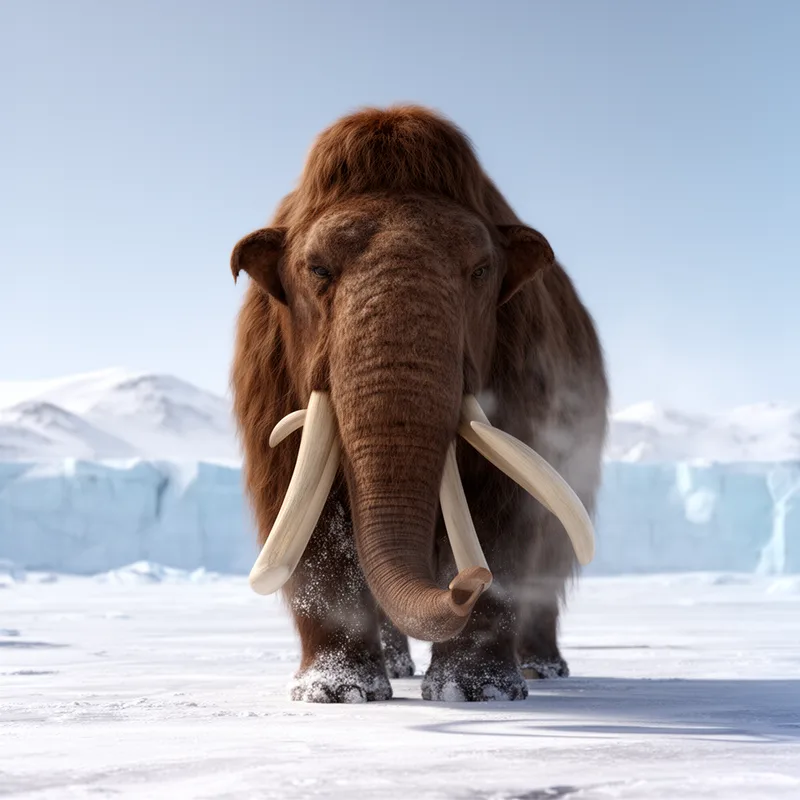
Mammuthus primigenius
- noun
- /ˈmæməθəs praɪˈmɪdʒɪnɪəs/
- Specialized
- Samples of Mammuthus primigenius DNA have given scientists new insights into Ice Age life.
Examples
-
Researchers believe that Mammuthus primigenius became extinct about 4,000 years ago.
-
The remains of Mammuthus primigenius have been discovered in both Europe and North America.
-
The Mammuthus primigenius roamed the tundra during the Ice Age.
-
Scientists discovered fossils of Mammuthus primigenius in Siberia.
-
Researchers believe that Mammuthus primigenius became extinct about 4,000 years ago.
-
Samples of Mammuthus primigenius DNA have given scientists new insights into Ice Age life.
-
The remains of Mammuthus primigenius have been discovered in both Europe and North America.
Synonyms
 4
5.2
4
5.2

A large extinct elephant with thick fur that lived in cold areas during the Ice Age

A very large, hairy animal like an elephant that lived in cold northern places
Surface Forms
Morphology
Mammuthus + primigenius
The genus name Mammuthus clearly signals a mammoth, so a learner who knows the constituents would infer this refers to a type of mammoth. However, the species epithet primigenius is a technical Latin term (suggesting "primeval" or "original") and is not commonly known, and it does not transparently convey the specific trait 'woolly' without zoological/taxonomic knowledge, so the meaning is only partially derivable from the parts.
Etymology
Mammuthus primigenius is the scientific name for the 'woolly mammoth'. The part Mammuthus shows it is a mammoth and the part primigenius means 'first' or 'very old', so the name makes you picture a giant, hairy elephant from the Ice Age.