
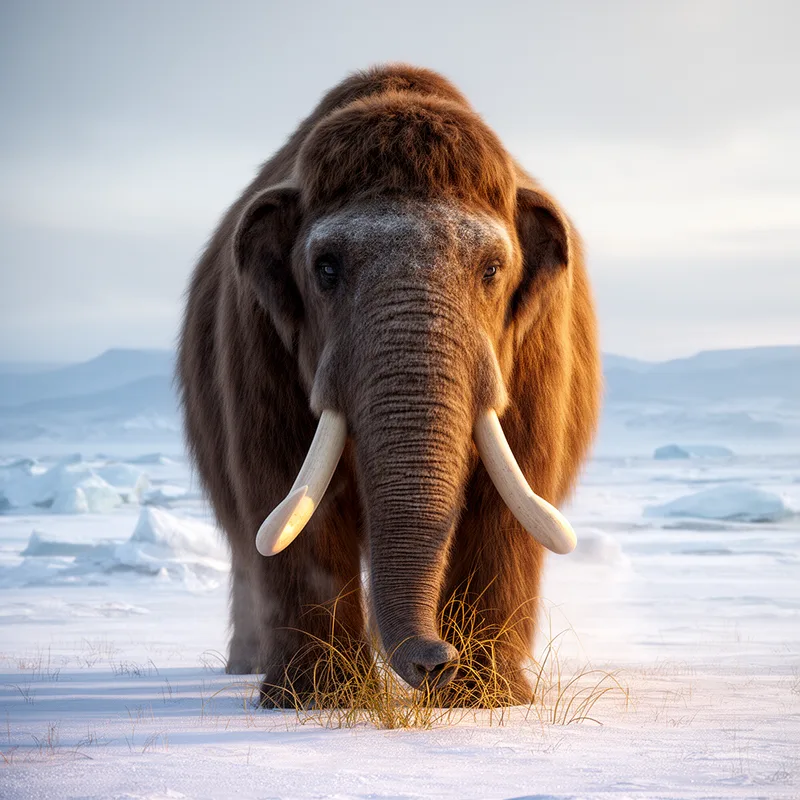
northern mammoth
- noun
- The northern mammoth had a thick coat adapted to Ice Age climates.
Examples
-
Fossils of the northern mammoth have been found in Siberian permafrost.
-
Scientists believe the northern mammoth grazed on grasses similar to modern elephants.
-
The northern mammoth roamed the icy tundras thousands of years ago.
-
Many fossils of the northern mammoth have been discovered in Siberia.
-
Fossils of the northern mammoth have been found in Siberian permafrost.
-
The northern mammoth had a thick coat adapted to Ice Age climates.
-
Scientists believe the northern mammoth grazed on grasses similar to modern elephants.
Synonyms
 4
5.2
4
5.2

A large extinct elephant with thick fur that lived in cold areas during the Ice Age

A large, hairy extinct elephant that lived in cold northern areas during the Ice Age
Surface Forms
Morphology
The phrase is a simple adjective + noun composition where 'northern' specifies geographic origin and 'mammoth' names the extinct hairy elephant; the combined meaning (a mammoth from northern/cold regions) is directly inferable from the parts. This straightforward compositional pattern is common cross-linguistically and should be understandable to a B1 learner who knows both constituent words.
Etymology
Northern mammoth is a name that paints a clear picture: a huge, very hairy elephant-like animal from the cold north. People found frozen remains in the far north, so northern shows where it lived and mammoth shows it was a huge, 'extinct' elephant-like animal, which explains the modern meaning.